Bamboo Digital Clock OEM Sample Brief: Display, Finish and Packaging Checks
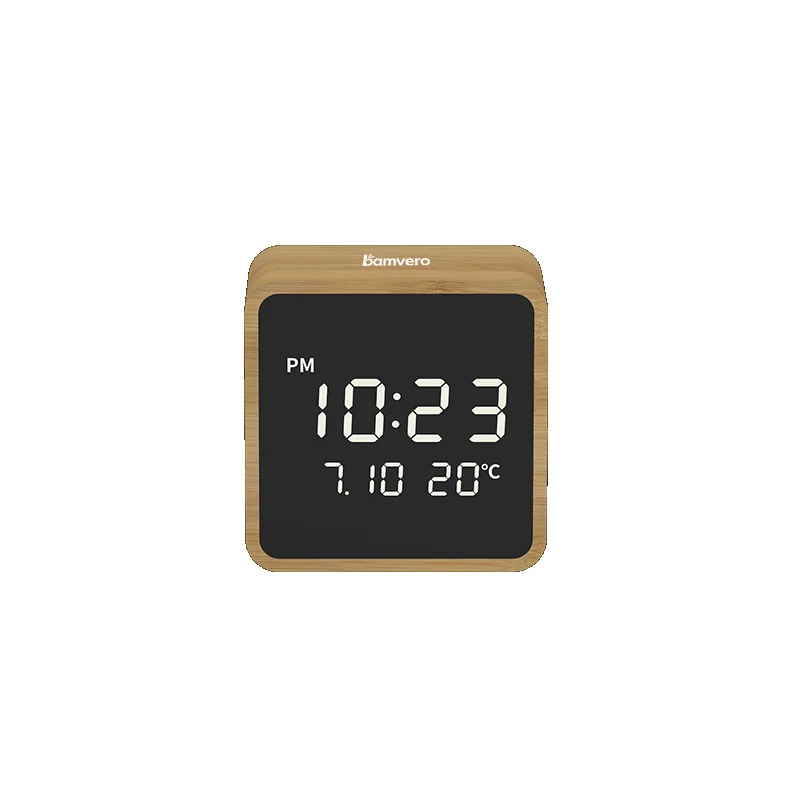
For a bamboo digital clock program, the approved sample is more than a product photo. It is the shared reference for the LED display, bamboo surface, logo location, instruction language and carton packing that will be repeated in production. A short written brief makes the first review faster and gives procurement teams a cleaner way to compare supplier feedback.
Start with the clock functions buyers will actually check
Begin with the usage setting instead of a long feature list. A bedside retailer, hotel purchasing team and corporate-gift buyer may all choose a bamboo digital clock, yet they focus on different details. Record the time format, brightness expectation, alarm behavior, temperature readout and power arrangement before the sample is sent.
Before the first sample is approved, turn the intended use into a short sourcing brief: where the clock will sit, who will see it, whether it will be sold or gifted, and which details are fixed.
For an OEM bamboo clock program, that brief should also record time format, power method, desired display color, logo position and packaging level. It prevents a visually attractive model from being reviewed against the wrong buying requirement.
When several departments are involved, give the same brief to sales, design and purchasing. A shared reference reduces last-minute changes after the model has already been selected.
Turn the initial request into a usable brief: specify the use case, target retail price band, display language, required power option and the quantity range being discussed. This gives the sampling team a clear frame for selecting models and avoids comparing products that are visually similar but unsuitable for the buyer's actual channel.
- Confirm whether the display uses 12-hour or 24-hour time.
- Review LED color and brightness in normal room light, not only in a studio photo.
- Confirm the alarm, temperature and date functions requested for the destination market.
- State the adapter, USB cable and battery-backup requirement in the quotation brief.
Review bamboo finish and brand presentation together
Natural bamboo gives the clock its material character, but the production standard still needs to be written down. Tone, grain direction, edge treatment and logo contrast can change how the same model appears in a gift box or hotel room. Approve one clear reference image and one sample before releasing artwork.
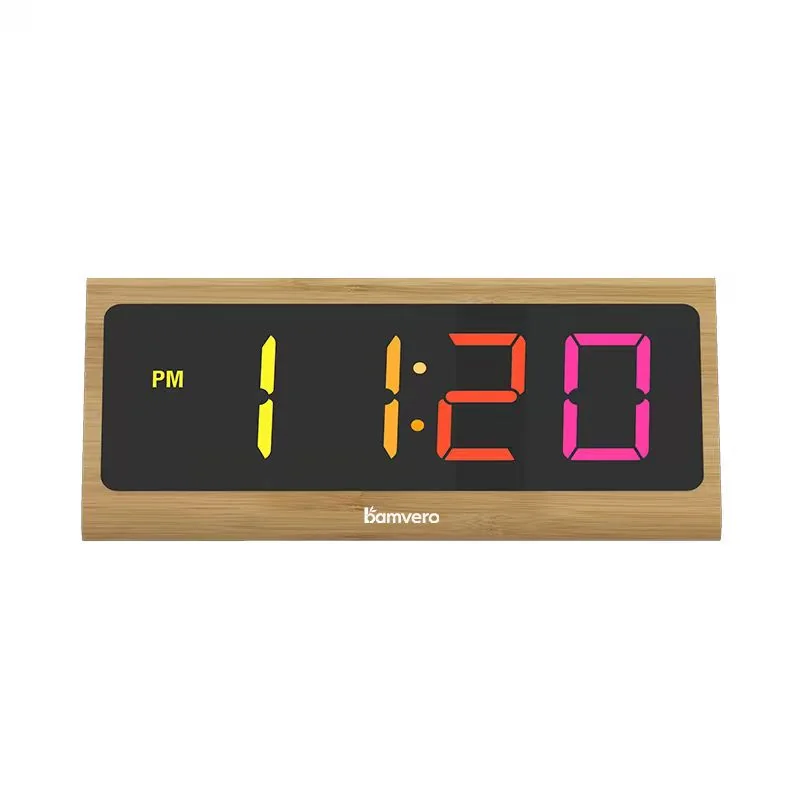
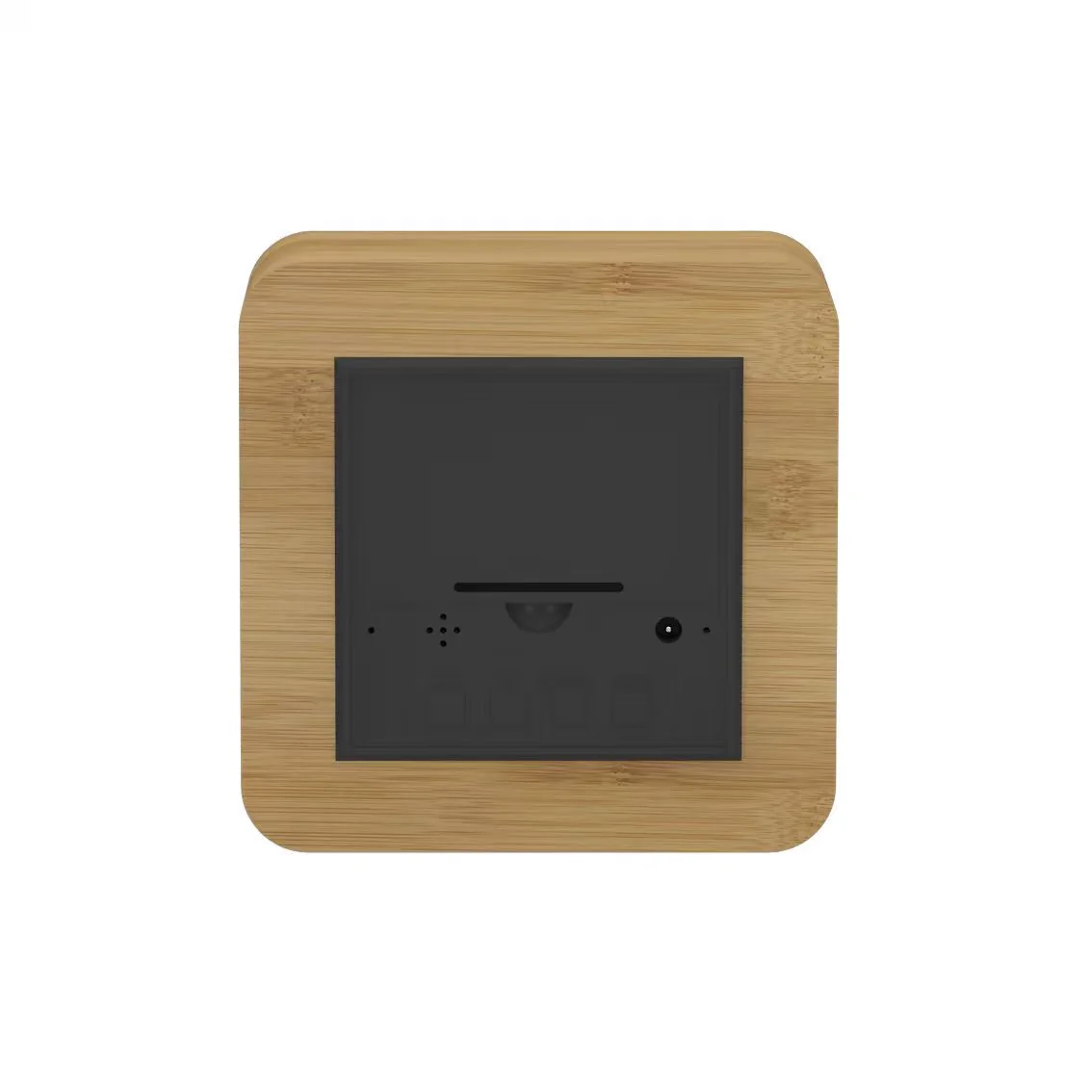
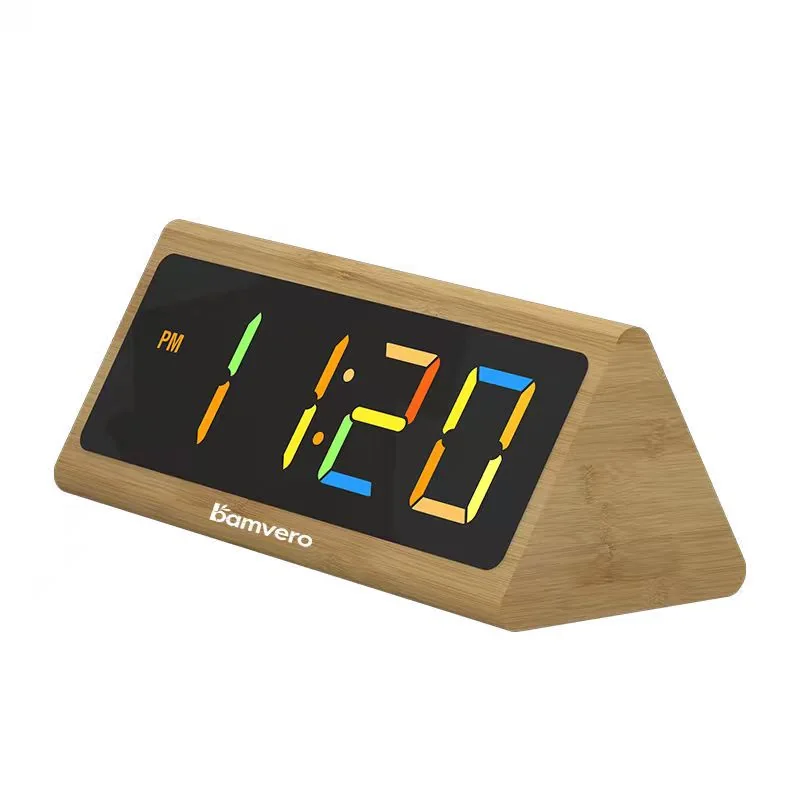
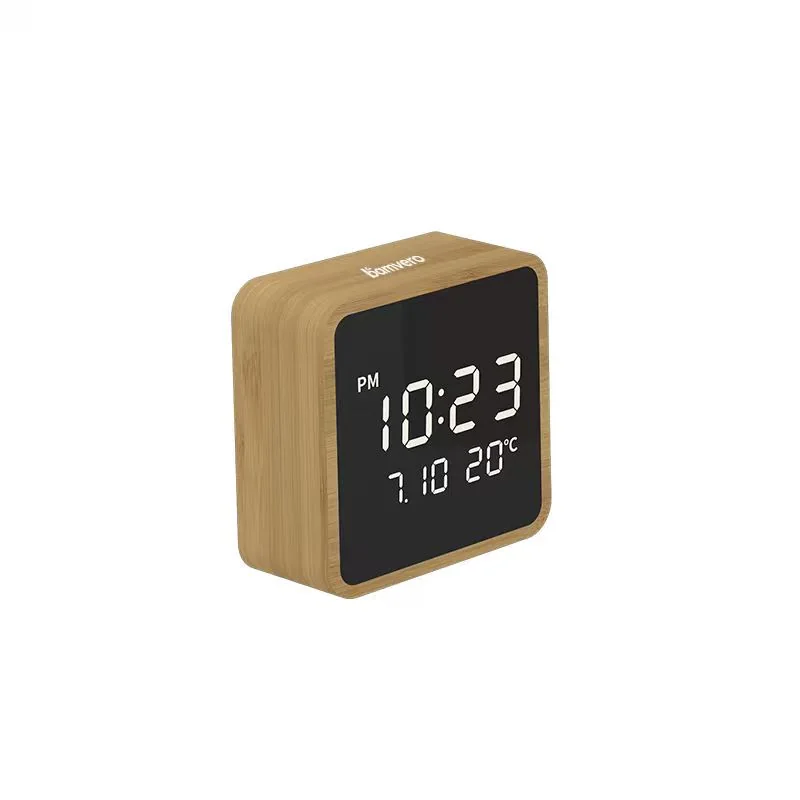
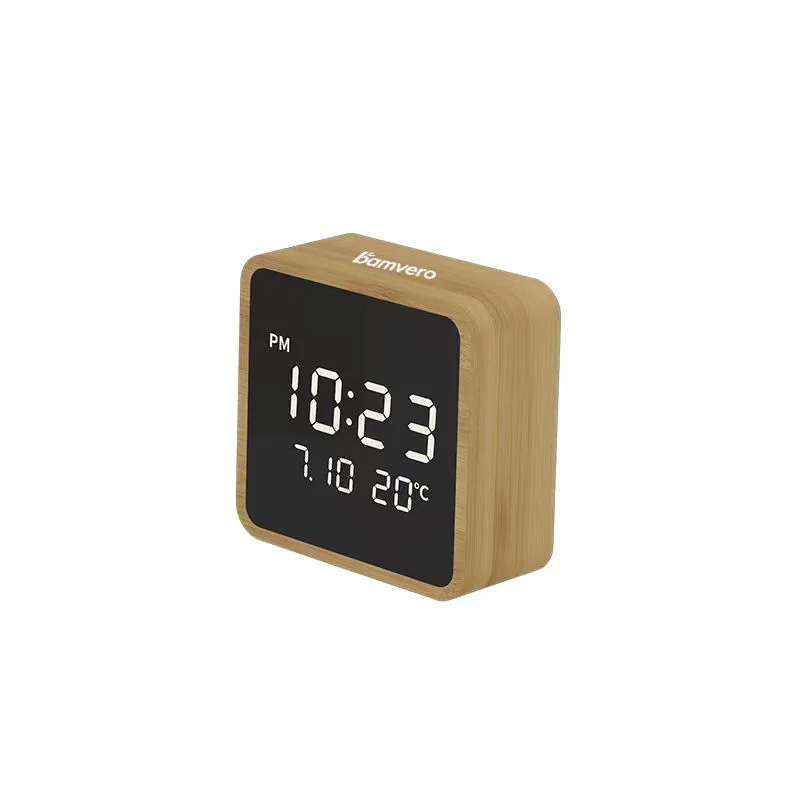
Ask for clear front, side and back references rather than relying on a single product image. Check the viewing angle, panel contrast, bamboo grain consistency and whether the cable or charging point suits the intended market.
When the item is for hospitality or retail, review it in typical room or shelf light. A display that looks bright in a studio can feel very different beside a bed or under store lighting.
If the buyer plans to offer the product in more than one market, list the power adapter, temperature unit and manual language early. These are simple to confirm during sampling and harder to correct at the final packing stage.
Review the display in the same kind of light where the product will be used. For hospitality and bedside programs, check visibility in a dim room as well as daytime readability. For retail, confirm that the bamboo finish, front display and key functions can be understood quickly from normal shelf distance.
Use two images to remove avoidable sample questions
A front image explains the display and material balance. A secondary angle helps a buyer see product depth, sidewall finish and the relationship between the black display panel and bamboo housing. These views are more useful than a large collection of unlabelled lifestyle images when an OEM sample needs internal sign-off.
Branding should be approved as one system. The logo placement, instruction language, retail box, inner protection and export-carton markings need one written reference before mass production starts.
Keep a signed sample photo and the approved artwork together with the model code. This gives the purchasing team a stable reference when a repeat order or new market version is discussed.
A compact packaging checklist should cover retail presentation and shipping protection at the same time. Clear carton marks, correct inner packing and a consistent model name improve receiving and replenishment work.
Treat logo, manual language, inner protection and carton marks as part of the product approval rather than paperwork to finish later. Packaging details affect the first unboxing experience and prevent costly corrections after production has already started.
Turn the approved sample into a repeat-order record
Once the sample is approved, keep the model number, display setting, artwork file, box reference and carton marks together. This record prevents small, expensive changes from appearing again when the program moves from a test order to a seasonal reorder.
A practical order path starts with a small matched sample set, then a written confirmation of the selected model, configuration and packing route. Keep the approved product record available for reorders.
This approach helps gift distributors, hotel suppliers and home-decor buyers separate style approval from commercial decisions such as MOQ, carton count and delivery planning.
After the first order, store the sample images, specifications and approved packaging files together. That record is more valuable for repeat orders than adding more unverified product choices.
Keep one approved record with the model number, selected photos, artwork files and any market-specific notes. When the order is repeated, this single reference helps the buyer, merchandising team and factory confirm the same configuration without reopening every decision.
Keep the sample brief short enough to be used.
The best OEM brief is not a catalogue. It is a one-page decision record a buyer, designer and factory team can read before confirming the next action. Bamboo material, display function and carton plan should be easy to find in the same document.