
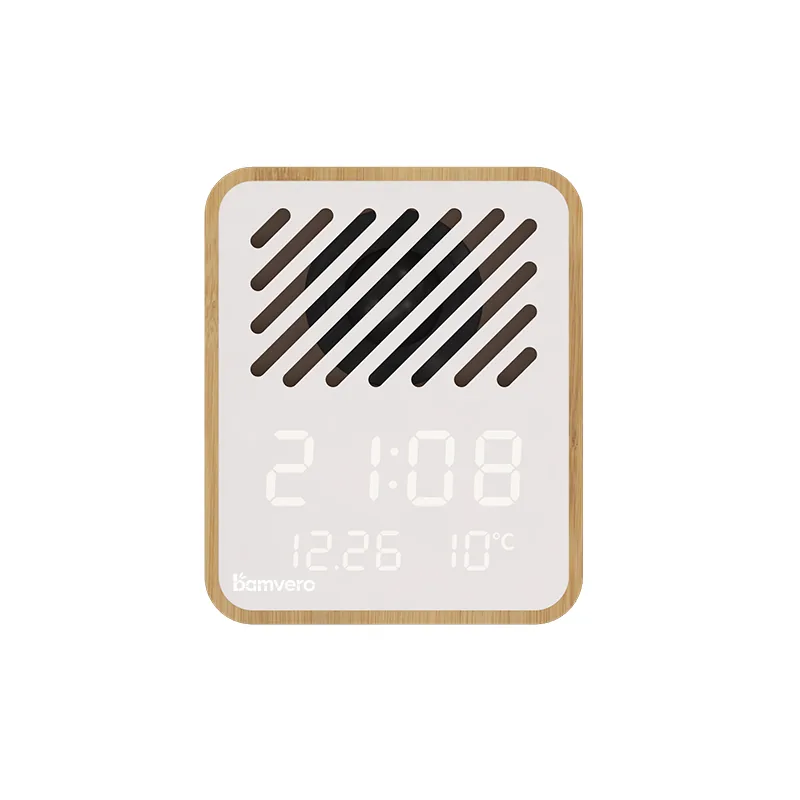
Bamboo Bluetooth Speaker Clock OEM: Sample Approval Checklist Before Mass Production
Use this checklist to record audio, Bluetooth, clock, bamboo finish, branding, packaging and documentation results before authorizing mass production.
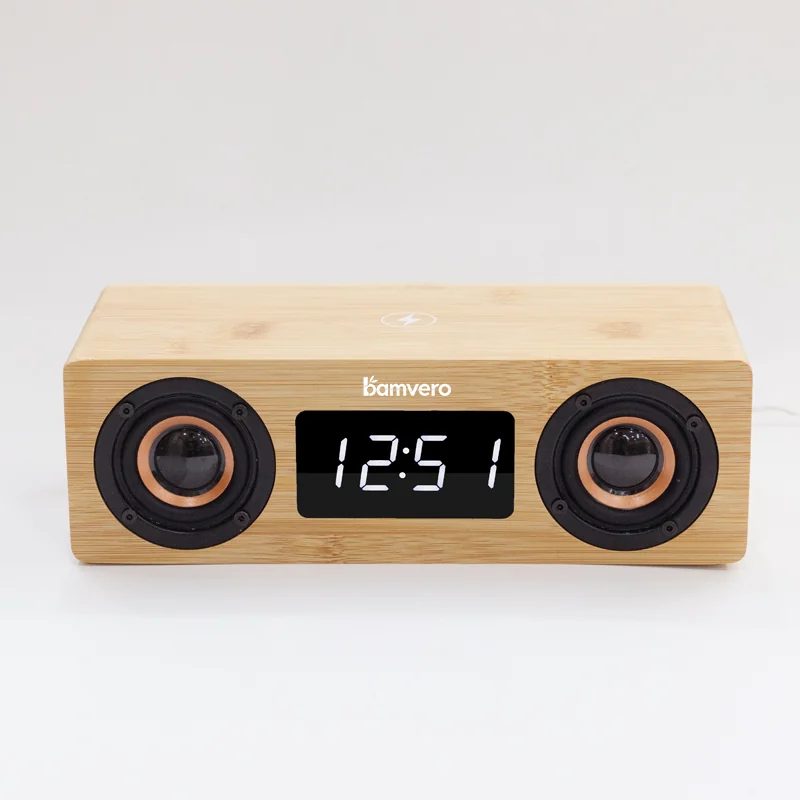
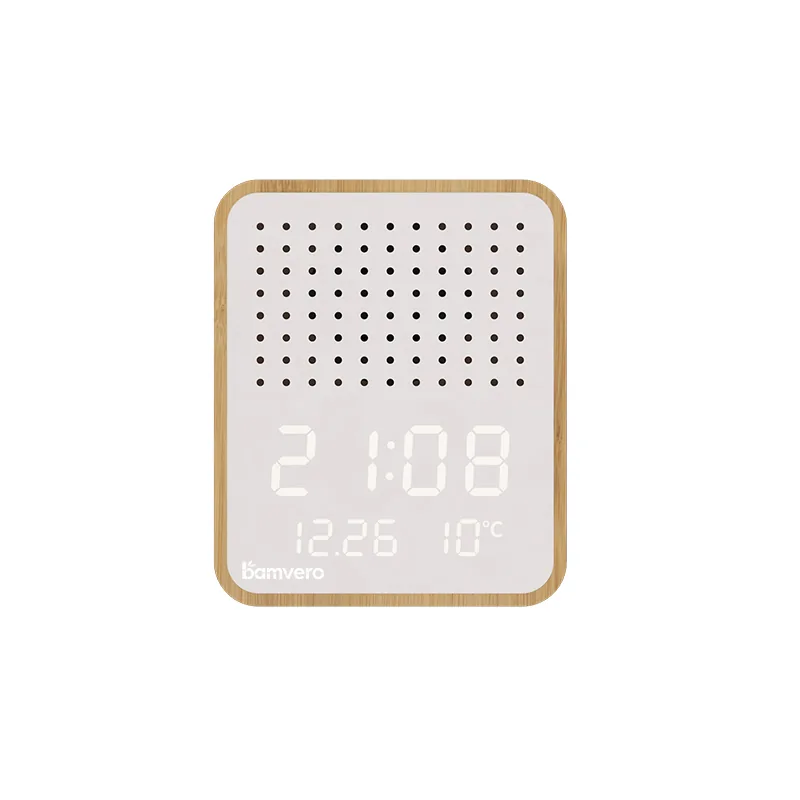
Before signing an OEM sample, review Y130-1 Bluetooth speaker alarm clock, Y103N Bluetooth speaker clock, Y120 wireless charging speaker clock and confirm the requirements for your project.
Who This Guide Is For
This checklist is written for brand owners, product managers, and OEM project leads who have received sample units of bamboo Bluetooth speaker clocks and need to approve them before placing a mass production order. You may be:
- Developing a private label bamboo electronics line for retail
- Creating a corporate gift product with custom branding
- Launching a Kickstarter or crowdfunding campaign
- Adding bamboo speaker clocks to an existing product catalog
- Evaluating multiple suppliers before selecting a manufacturing partner
The core question: What should you test, measure, and verify during the sample approval stage to avoid quality issues, design problems, and customer complaints after mass production?
Why Sample Approval Matters
Sample approval is your final opportunity to identify and correct issues before committing to production. Common problems discovered during proper sample testing:
- Audio quality issues: Distortion at high volume, weak bass, imbalanced left/right channels
- Bluetooth connectivity problems: Pairing failures, connection drops, limited range
- Clock display defects: Incorrect time format, dim LEDs, unreadable from normal viewing distance
- Bamboo finish inconsistencies: Color variations, rough surfaces, visible glue lines
- Logo placement errors: Misaligned printing, wrong size, incorrect color
- Packaging damage risks: Insufficient protection, poor fit, missing components
Fixing these issues after production starts is expensive or impossible. Once production begins, a repeated defect can affect the whole purchase quantity, so the approved sample and written specification must be unambiguous.
Section 1: Audio Performance Testing
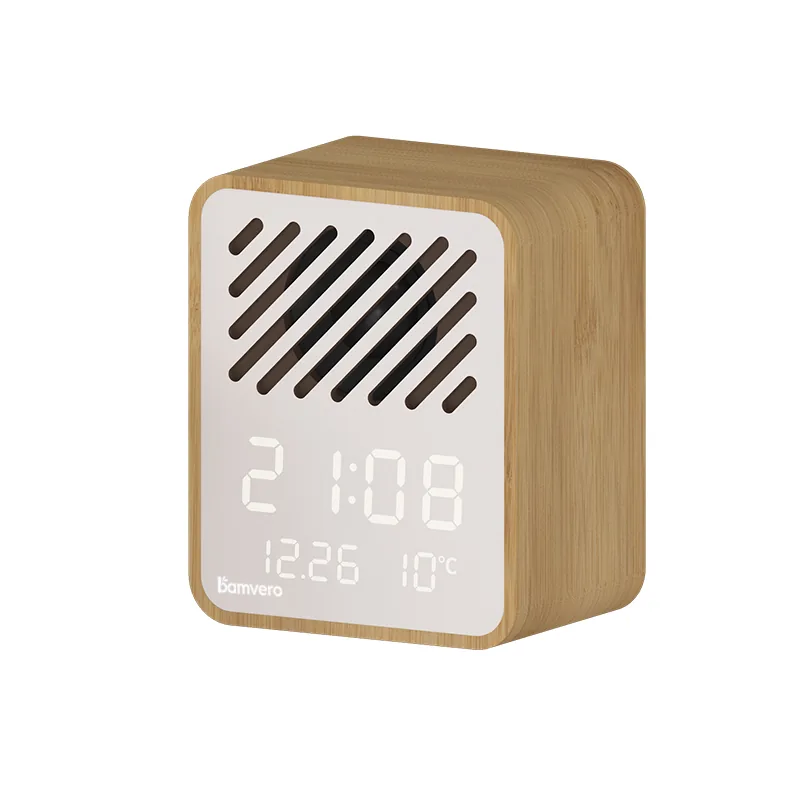
1.1 Frequency Response and Sound Quality
Test Method: Play audio content covering full frequency range (bass-heavy music, vocal podcasts, classical orchestral recordings).
Check For:
- Bass response: Does the speaker produce audible bass, or does it sound thin and tinny?
- Midrange clarity: Are vocals clear and natural, or muffled and distorted?
- Treble detail: Can you hear high-frequency instruments (cymbals, violins) without harshness?
- Overall balance: Does the speaker favor any frequency range excessively?
Acceptance Criteria: Compact speaker clocks should be judged against the approved driver, amplifier and enclosure specification. Define the intended use, then compare sound quality against:
- Your target retail price point competitors
- Customer expectations for the product category
- Intended use cases (bedside alarm, office desk, background music)
Red Flags:
- Distortion at 70-80% volume (customers will complain about "broken speaker")
- No bass response whatsoever (sounds like phone speaker)
- Harsh, piercing treble that causes listening fatigue
1.2 Maximum Volume Level
Test Method: Play music at maximum volume (100%) for 2-3 minutes.
Check For:
- Actual loudness at a defined distance, using the same measurement method for every sample
- Distortion or crackling at maximum volume
- Enclosure rattling or vibration (bamboo panels should not buzz)
- Heat generation (speaker driver area should warm slightly, not hot)
Acceptance Criteria: Maximum volume should be:
- Loud enough for intended use (bedside alarm should wake user; office desk should fill small room)
- Free of distortion and mechanical noise
- Comparable to or better than competitor products in same price range
Red Flags:
- Distortion begins at 60-70% volume (indicates underpowered amplifier or low-quality driver)
- Enclosure vibration or rattling (poor internal assembly or loose bamboo panels)
- Excessive heat (circuit design issue or inadequate ventilation)
1.3 Bluetooth Connectivity and Range
Test Method:
- Pair speaker clock with your smartphone (iOS and Android if possible)
- Play audio and walk away from speaker, measuring distance before connection drops
- Test with obstacles between phone and speaker (walls, furniture, your body)
- Disconnect and repair multiple times to test consistency
Check For:
- Pairing speed: Should connect within 5-10 seconds on first pairing
- Pairing name: Check if speaker appears with correct product name or supplier's generic name (confirm custom name availability for your brand)
- Connection stability: Audio should not stutter or drop within the buyer-approved test environment
- Effective range: Record open-space and obstacle results against the agreed product specification
- Reconnection: Should automatically reconnect when phone comes back in range after disconnection
Acceptance Criteria: Confirm the Bluetooth version, antenna design and claimed range for the exact model. Test every candidate under the same conditions instead of assuming a generic range.
Red Flags:
- Connection drops materially earlier than the approved specification or comparison sample
- Takes more than 15 seconds to pair (poor user experience)
- Fails to reconnect automatically (requires manual re-pairing each time)
- Pairs with incorrect name that cannot be customized (branding issue)
1.4 Audio Quality Over Bluetooth
Test Method: Play high-quality audio files (320kbps MP3 or FLAC) over Bluetooth and listen for compression artifacts or quality loss.
Check For:
- Audible compression or quality degradation compared to wired audio sources
- Lip-sync delay when watching video (should be <100ms, imperceptible)
- Audio dropouts or stuttering during playback
Acceptance Criteria: Audio should sound clear and consistent for the intended use. If video playback matters, measure and approve acceptable latency on representative devices.
Note: Ask the supplier to document the supported codec set for the exact Bluetooth module. Do not advertise AAC, aptX or another codec unless the model documentation confirms it.
Section 2: Clock Display and Time Function Testing
2.1 Display Readability
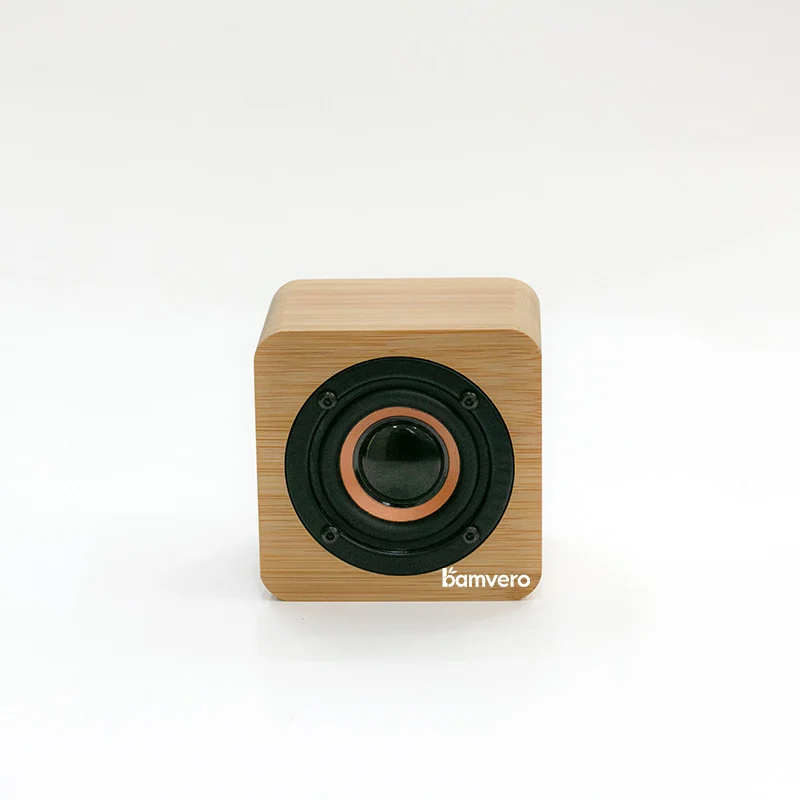
Test Method: Place speaker clock at typical usage distance (bedside: 1-2 meters; desk: 0.5-1 meter) and evaluate display visibility.
Check For:
- Digit size: Can you read time easily from intended viewing distance?
- Display brightness: Is brightness appropriate for day and night use?
- Brightness adjustment: If adjustable brightness is included, test all levels
- Viewing angle: Can you read display from 30-45 degree angles (lying in bed, sitting at desk)?
- Color and contrast: White or amber LEDs on bamboo background should have strong contrast
Acceptance Criteria: LED digit height should be 2-3 cm for bedside use, 1-2 cm for desk use. Display should be readable in bright daylight and not blindingly bright in darkness (adjustable brightness strongly recommended for bedside products).
Red Flags:
- Display too dim to read in daylight
- Display too bright for nighttime use without adjustment option
- Digits blur or wash out at viewing angles beyond straight-on
- Color choice (red, blue, green) inappropriate for intended use context
2.2 Time Accuracy and Drift
Test Method: Set clock to correct time and let it run for 24-48 hours. Compare against smartphone or computer clock.
Check For:
- Time drift (gaining or losing minutes per day)
- Consistent timekeeping across multiple sample units (test 2-3 units if available)
Acceptance Criteria: Define the permitted time drift in the approved specification, then measure every sample for the same period under the same power conditions.
Red Flags:
- Losing or gaining more than 5 minutes per day (component quality issue)
- Inconsistent drift between sample units (quality control problem in manufacturing)
Note: Some models include automatic time synchronization via Bluetooth connection to smartphone. If this feature is present, verify it works reliably with both iOS and Android devices.
2.3 Alarm Function Testing
Test Method: Set alarm for various times and test alarm sound, volume, and control behavior.
Check For:
- Alarm sound: Tone, beep pattern, or music (confirm it's appropriate for wake-up use)
- Alarm volume: Loud enough to wake user, but not startlingly harsh
- Volume ramp: Does alarm start quiet and increase (gentle wake), or start at full volume?
- Snooze function: If included, confirm the configured snooze duration and how to activate it
- Alarm off: How do you stop alarm? (button press, touch sensor, voice command)
- Alarm memory: Does alarm setting persist after power loss or unplugging?
Acceptance Criteria: Alarm should be reliable, audible, and easy to control. Test alarm function across multiple days to confirm consistency.
Red Flags:
- Alarm fails to sound at set time (circuit or software bug)
- Alarm volume too quiet to wake user (poor speaker integration with alarm function)
- Difficult to turn off alarm (hidden button, requires multiple presses, confusing control sequence)
- Alarm settings reset after unplugging (no battery backup for settings memory)
2.4 Control Interface Usability
Test Method: Set time, set alarm, adjust brightness, and control audio playback using physical buttons or touch controls.
Check For:
- Button tactile feel: Firm, responsive press with clear feedback
- Button labels: Clear, readable, correctly positioned
- Control logic: Intuitive button combinations (avoid complex multi-press sequences)
- Touch sensitivity: If touch controls are used, test responsiveness and accuracy
- Button layout: Easy to locate buttons without looking (important for bedside use in darkness)
Acceptance Criteria: Average user should be able to set time and alarm within 30-60 seconds without reading instruction manual. Complex button sequences or hidden controls reduce user experience quality.
Red Flags:
- Mushy or unresponsive buttons (poor switch quality)
- Buttons require excessive force to activate
- Touch controls too sensitive (accidental activation) or too insensitive (requires multiple taps)
- Button functions not obvious (requires trial and error or manual reading)
Section 3: Bamboo Material and Finish Quality
3.1 Bamboo Surface Inspection
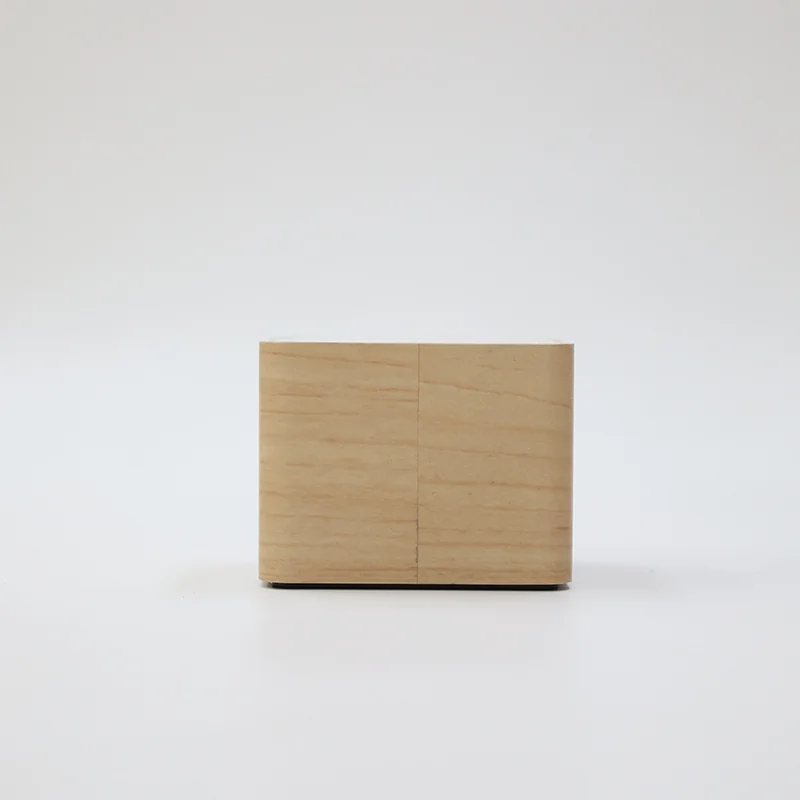
Test Method: Examine bamboo surfaces in good lighting from multiple angles.
Check For:
- Grain consistency: Natural bamboo grain should be visible and consistent across panels
- Color uniformity: All bamboo surfaces should match in color (natural or carbonized)
- Surface smoothness: Run fingertips across bamboo to detect rough spots, splinters, or uneven areas
- Glue lines: Check joints between bamboo panels for visible glue residue or gaps
- Finish coating: If bamboo is coated (polyurethane or lacquer), check for even application, no drips or bubbles
Acceptance Criteria: Bamboo is a natural material with inherent grain variation. Expect some color and grain differences between units (this is normal and desirable). However, surface should be smooth, well-finished, and free of defects like cracks, splinters, or excess glue.
Red Flags:
- Rough, unfinished surfaces (splinter risk)
- Large gaps or misalignment between bamboo panels
- Visible glue smears or residue on exposed surfaces
- Cracks or splits in bamboo (structural and aesthetic issue)
- Repeating grain pattern (indicates printed vinyl, not real bamboo)
3.2 Structural Integrity and Assembly Quality
Test Method: Apply gentle pressure to corners and joints, check for flex or movement. Inspect all seams and assembly points.
Check For:
- Solid construction: Speaker clock should feel robust, not hollow or fragile
- Joint quality: Bamboo panels should be securely attached with no gaps or rattling
- Internal fit: Shake unit gently and listen for loose components inside
- Bottom stability: Place on flat surface and check for wobbling or uneven feet
- Port and button fit: Check USB port, AUX input (if present), and buttons for secure mounting
Acceptance Criteria: Bamboo speaker clock should feel like a finished product, not a prototype. All components should be securely assembled with no movement or rattling.
Red Flags:
- Loose or rattling internal components (speaker driver, circuit board, display module)
- Gaps between bamboo panels and internal structure
- Wobbly or uneven base (product rocks on flat surface)
- Ports or buttons feel loose or poorly fitted
3.3 Bamboo Durability Testing
Test Method: Simulate typical handling and use scenarios.
Check For:
- Handling test: Use an agreed handling or drop-test method that reflects the product, packaging and destination requirements. Record cosmetic and functional results.
- Cleaning test: Wipe bamboo surface with slightly damp cloth. Bamboo should not absorb water excessively or show finish damage.
- Button wear: Press buttons 50-100 times rapidly. Buttons should maintain tactile feel and function.
- Heat exposure: Play audio at high volume for 30-60 minutes and check for excessive heat buildup or bamboo damage near speaker driver.
Acceptance Criteria: Bamboo speaker clock should survive normal handling and cleaning without damage. Minor cosmetic wear is acceptable, but structural or functional damage indicates quality issues.
Red Flags:
- Bamboo cracks or splits from minor impact
- Water absorption causes bamboo swelling or finish damage
- Buttons become unresponsive after moderate use
- Excessive heat causes bamboo discoloration or warping
Section 4: Logo and Branding Verification
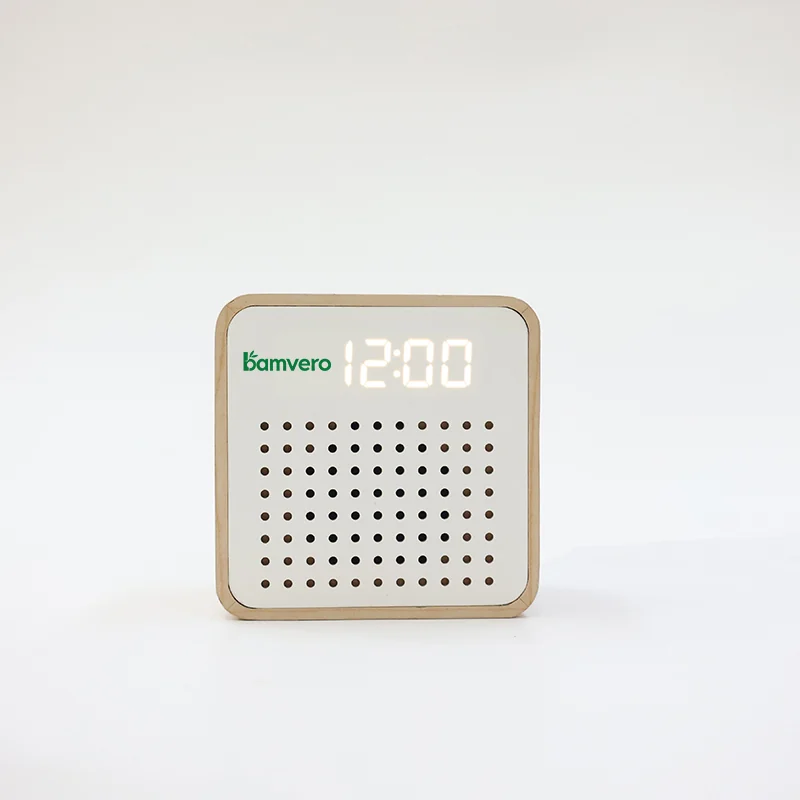
4.1 Logo Placement and Size
Test Method: Compare logo placement, size, and alignment against your original artwork and specification sheet.
Check For:
- Placement accuracy: Logo positioned exactly as specified (front panel, top surface, back panel)
- Size accuracy: Measure logo dimensions and compare to specification (use ruler or caliper)
- Alignment: Logo should be centered, level, and properly oriented
- Clearance: Logo should not overlap with buttons, display, or speaker grille
Acceptance Criteria: Logo placement should match your approved design specification exactly. Any deviation requires supplier explanation and correction before mass production.
Red Flags:
- Logo misaligned or crooked
- Logo size or position falls outside the tolerance written on the approved artwork
- Logo placed incorrectly (wrong surface or wrong position)
- Logo obstructs functional elements (covers buttons, blocks display)
4.2 Logo Print or Engraving Quality
Test Method: Examine logo closely in good lighting. Use magnifying glass if needed for fine details.
Check For:
- Print method: Confirm laser engraving, screen printing, UV printing, or other specified method was used
- Detail clarity: All logo elements (text, graphics, fine lines) should be sharp and clear
- Color accuracy: If printed in color, compare against Pantone or color reference (if specified)
- Edge quality: Logo edges should be clean, not fuzzy or pixelated
- Durability: Rub logo firmly with dry cloth to test adhesion (printed logos should not smear or fade)
Acceptance Criteria: Logo should look professional and permanent. Laser engraving should have consistent depth and clean edges. Printing should have accurate colors and sharp details.
Red Flags:
- Blurry or pixelated logo (low-resolution artwork or poor printing)
- Color mismatch (printed color significantly different from specified color)
- Engraving too shallow (may fade or fill with dust) or too deep (damages bamboo structure)
- Printed logo rubs off easily (poor ink adhesion or no protective coating)
4.3 Branding Consistency Across Multiple Units
Test Method: If you received multiple sample units, compare logo quality and placement across all units.
Check For:
- Consistent logo size, placement, and alignment on all units
- Consistent print quality and color across all units
- No variation in logo appearance that would be noticeable in retail display
Acceptance Criteria: All units from the same production batch should have identical logo quality and placement. Variation between units indicates poor manufacturing process control.
Red Flags:
- Logo placement varies by several millimeters between units
- Color or clarity varies noticeably between units
- Some units have perfect logos while others have visible defects (suggests inconsistent quality control)
Section 5: Packaging Evaluation
5.1 Packaging Design and Branding
Test Method: Examine outer box, inner packaging, and all printed materials.
Check For:
- Brand alignment: Packaging design matches your brand guidelines (colors, fonts, logo usage)
- Product information accuracy: Product name, features, specifications correctly listed
- Regulatory compliance: Required certifications, safety warnings, country of origin correctly displayed
- Barcode and SKU: If applicable, confirm barcode scans correctly and SKU matches your system
- Language accuracy: Check all text for spelling, grammar, and translation errors (especially important for multilingual packaging)
Acceptance Criteria: Packaging should look professional, accurately represent the product, and comply with all regulatory requirements for your target markets.
Red Flags:
- Incorrect product name, features, or specifications
- Missing, unsupported or incorrectly placed regulatory and recycling marks required for the destination market
- Spelling or grammar errors in packaging text
- Low-quality printing (blurry graphics, misaligned colors, poor paper quality)
- Barcode doesn't scan or links to wrong product
5.2 Protective Packaging and Product Condition
Test Method: Open packaging as a customer would and inspect product condition. Repack and conduct drop test if feasible.
Check For:
- Protection adequacy: Product should be secured with foam, molded pulp, or cardboard inserts (not loose in box)
- Product condition: No scratches, dust, fingerprints, or damage on bamboo surfaces
- Component security: Check that all loose items (USB cable, user manual, warranty card) are secured and won't scratch product during shipping
- Unpacking experience: Packaging should open easily and reveal product in appealing way (important for gift and retail products)
Acceptance Criteria: Product should arrive in perfect condition after typical shipping and handling. Packaging should protect bamboo surfaces, display, and buttons from impact and scratching.
Red Flags:
- Product moves freely inside box (insufficient padding)
- Bamboo surface scratched by loose accessories or packaging materials
- Display or buttons damaged during shipping
- Difficult to open packaging (excessive tape, unclear opening instructions)
5.3 Included Accessories and Documentation
Test Method: Verify all promised accessories and documents are included and correct.
Check For:
- Power cable: Correct type (USB-C, Micro-USB, DC adapter), adequate length, proper connectors
- User manual: Complete, accurate instructions in correct language(s)
- Warranty card: If included, verify warranty terms match your agreement with supplier
- Quick start guide: If included, verify it's clear and helpful for first-time setup
- Additional accessories: AUX audio cable, remote control, or other items as specified
Acceptance Criteria: All listed accessories must be included, functional, and correctly specified. User manual should accurately describe product features and controls (have someone unfamiliar with the product test the manual by following it to set up and use the speaker clock).
Red Flags:
- Missing accessories
- Wrong cable type or length
- User manual has errors, unclear instructions, or describes different product
- Poor translation or machine-translated manual (indicates supplier used generic manual, not custom for your product)
Section 6: Certification and Compliance Documentation
6.1 Required Certifications for Your Market
Confirm with Supplier:
For EU Market:
- [ ] CE marking (Electromagnetic Compatibility Directive, Radio Equipment Directive)
- [ ] RoHS compliance (Restriction of Hazardous Substances)
- [ ] WEEE compliance (Waste Electrical and Electronic Equipment)
- [ ] Declaration of Conformity document
For US Market:
- [ ] FCC certification (Federal Communications Commission - for Bluetooth radio)
- [ ] FCC ID visible on product or packaging
- [ ] FCC compliance statement in user manual
For Japan Market:
- [ ] TELEC certification (Technical Conformity Mark for radio equipment)
- [ ] PSE marking (Product Safety Electrical Appliance & Material Safety Law - if powered device)
For Australia:
- [ ] RCM marking (Regulatory Compliance Mark)
- [ ] ACMA registration (Australian Communications and Media Authority - for Bluetooth radio)
For Other Markets:
- Confirm country-specific requirements with supplier or local compliance consultant
6.2 Bamboo and Material Certifications
Optional but Valuable for Marketing:
- [ ] FSC certification (Forest Stewardship Council - for sustainably sourced bamboo)
- [ ] Bamboo source documentation (confirms bamboo species and origin)
- [ ] Material safety data sheets (MSDS) for finishes, adhesives, coatings
Note: FSC certification is particularly valuable for brands emphasizing sustainability. Confirm whether supplier's bamboo is FSC-certified, and request chain-of-custody documentation if you plan to make FSC claims in marketing.
6.3 Test Reports and Quality Documents
Request from Supplier:
- [ ] Bluetooth qualification test report (confirms Bluetooth SIG compliance)
- [ ] Wireless performance test report (range, interference, power consumption)
- [ ] Audio performance test report (frequency response, THD, maximum output)
- [ ] Safety test report (electrical safety, battery safety if applicable, temperature rise)
- [ ] Drop test report (if applicable - shows product can survive typical handling)
- [ ] Material composition report (RoHS compliance confirmation)
Acceptance Criteria: Test reports should be from recognized third-party labs (Intertek, SGS, TÜV, UL, or equivalent), not from supplier's internal lab. Reports should specifically reference your product model or clearly applicable generic test.
Red Flags:
- No test reports available
- Test reports from unknown or unverifiable labs
- Test reports for different product model with claim "same design"
- Test reports missing critical tests (Bluetooth performance, audio quality, safety)
Section 7: Final Approval Decision Framework
7.1 Sample Approval Checklist Summary
Use this checklist to track your sample evaluation:
Audio Performance:
- [ ] Sound quality acceptable for intended use and price point
- [ ] Maximum volume adequate without distortion
- [ ] Bluetooth pairing fast and reliable
- [ ] Bluetooth range meets the written specification under the agreed test conditions
- [ ] Audio quality over Bluetooth acceptable
Clock Display and Function:
- [ ] Display readable from intended distance and angles
- [ ] Brightness appropriate (or adjustable)
- [ ] Time accuracy within ±2 seconds per day
- [ ] Alarm function reliable and easy to use
- [ ] Controls intuitive and responsive
Bamboo Material and Build:
- [ ] Bamboo surface smooth and well-finished
- [ ] Construction solid with no loose components
- [ ] Product survives normal handling and cleaning
- [ ] Overall build quality matches price positioning
Logo and Branding:
- [ ] Logo placement, size, and alignment correct
- [ ] Logo quality professional and durable
- [ ] Consistent across multiple sample units
Packaging:
- [ ] Packaging design matches brand guidelines
- [ ] Product information accurate and compliant
- [ ] Protective packaging adequate for shipping
- [ ] All accessories and documentation included
Certifications and Compliance:
- [ ] Required certifications for target markets confirmed
- [ ] Test reports and documentation provided
- [ ] Bamboo certifications available if needed for marketing
7.2 Approval Decision Options
Full Approval: All critical items pass inspection. Proceed to mass production order.
Conditional Approval: Minor issues identified that can be corrected without new sample:
- Examples: User manual typos, packaging text corrections, minor logo size adjustment
- Action: Provide written corrections to supplier, confirm changes will be implemented, request pre-production verification photos
Rejection with Revision: Significant issues require new sample before approval:
- Examples: Audio quality below expectations, logo misplaced, packaging design wrong, bamboo finish poor
- Action: Document all issues clearly with photos and measurements, request revised sample, repeat approval process
Project Cancellation: Fundamental problems indicate supplier cannot meet requirements:
- Examples: Consistent quality failures across multiple sample rounds, missing required certifications, unwilling to make necessary corrections
- Action: Terminate relationship with current supplier, source alternative manufacturer
7.3 Pre-Production Confirmation
Even after sample approval, confirm the following before mass production begins:
Production Specifications:
- [ ] Supplier confirms all sample corrections implemented
- [ ] Production timeline and delivery schedule agreed
- [ ] Order quantity, unit cost, and payment terms confirmed in writing
- [ ] Packaging and logo specifications documented with approved reference samples
Quality Control Plan:
- [ ] Agree the inspection standard, defect classes and acceptance thresholds in writing
- [ ] Schedule pre-shipment inspection (third-party QC service recommended)
- [ ] Define the sampling plan with the buyer, supplier or qualified inspection provider
- [ ] Confirm defect handling process (replacement, refund, rework)
Documentation:
- [ ] Final test reports and certifications to be provided before shipment
- [ ] User manuals and warranty cards to be provided for review before printing full quantity
- [ ] Product photos and marketing materials to be provided (if applicable)
Related sourcing resources
Methodology and official references
Prices, fees, freight and margins shown in this guide are indicative planning examples prepared in August 2026. They are not offers or guaranteed outcomes. Confirm current quotations, tariff classification, tax, marketplace fees and compliance requirements for the exact product and destination.
Frequently asked questions
How many OEM speaker clock samples should a buyer test?
When practical, test more than one unit so you can compare finish, logo placement and function consistency. Set the quantity from the project value, customization scope and test plan.
Which Bluetooth details belong in the approval report?
Record the module or version stated for the exact model, pairing name, reconnection behavior, tested devices, test environment, measured range and any audio interruptions.
How should natural bamboo variation be approved?
Agree an acceptable visual range with reference samples or photographs. Natural grain variation can be acceptable, but cracks, splinters, gaps, excess glue and unstable assembly should be classified separately.
Which compliance documents should be checked?
The required evidence depends on the destination market and exact radio, battery and power configuration. Verify reports and markings with qualified providers instead of copying a generic certification list.
How is the approved sample linked to mass production?
Keep a signed reference sample and a controlled specification covering electronics, finish, artwork, packaging and tests. Use both during pre-production confirmation and final inspection.
Build the specification before comparing the final price.
Align the target channel, product functions, destination market, branding and packaging route before approving a sample or bulk quotation.