
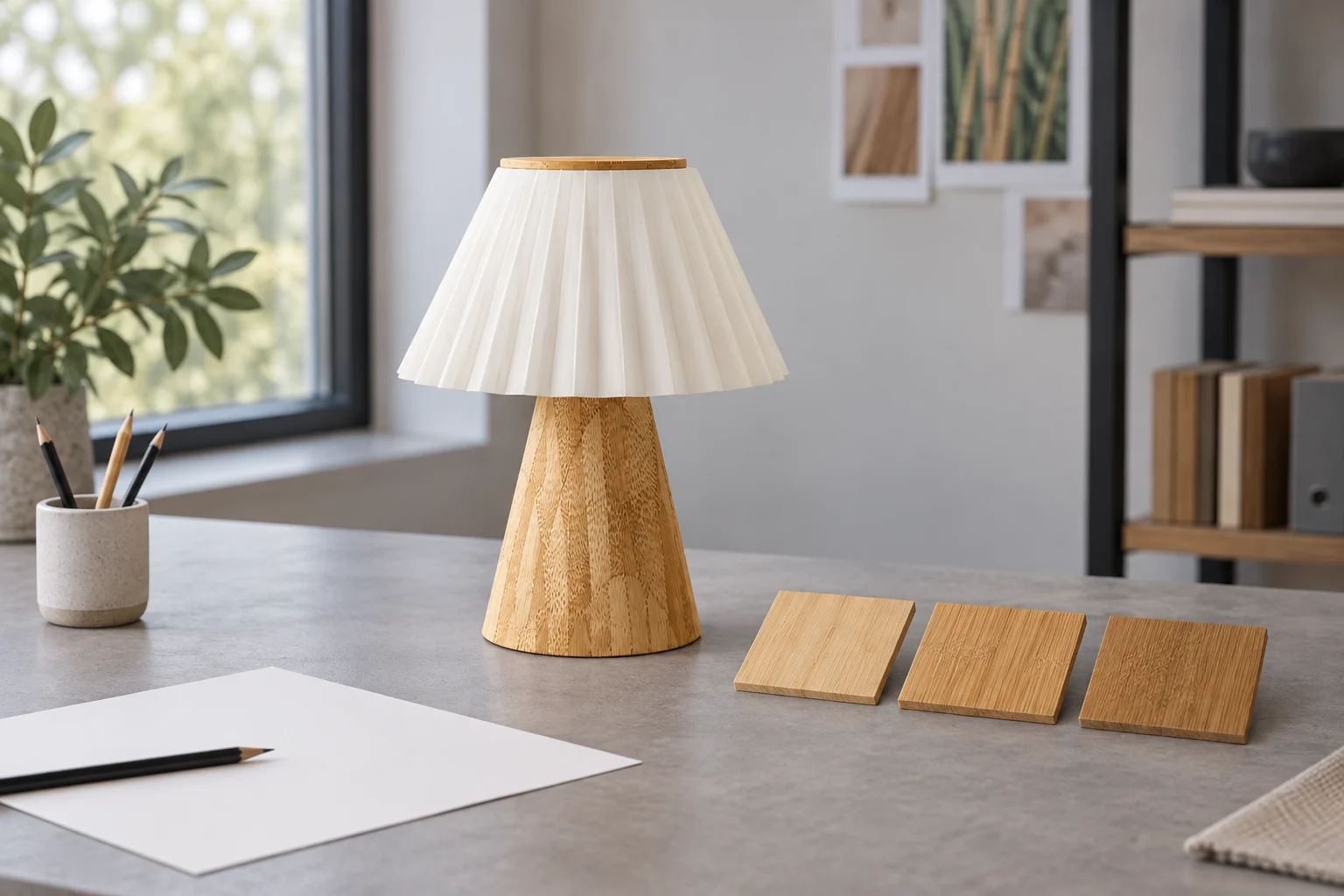
AI-generated appearance-review concept based on T2631, not an inspection record or approved finish range. Swatches are illustrative props.
Bamboo Table Lamp Orders: Agreeing on Finish Before Production
Turn colour and grain expectations into a shared physical reference before the production order.
A lamp can work perfectly and still disappoint a buyer when the bamboo base looks different from the sample on their desk. The difficulty is not always a manufacturing fault. Sometimes the buyer approved a photograph while the supplier understood the approval to cover a physical sample, and neither side defined the acceptable range of appearance.
For buyers ordering bamboo table lamps, finish acceptance deserves its own discussion before production. The objective is not to remove all natural grain variation. It is to distinguish an agreed material characteristic from a surface issue that needs review, using references both sides can actually inspect.
Start with the surfaces customers will see
Separate the base, shade, top details and assembly joints when describing appearance. A dark mark on a hidden underside has a different visual impact from a mark beside the logo. Identify the surfaces normally visible during display and ordinary handling rather than applying an undefined instruction such as “perfect finish” to every part.
The T2631 pleated table lamp is a useful visual reference: its bamboo base and light-coloured pleated shade form two distinct areas for review. A satisfactory base does not establish that the shade is clean, evenly assembled or aligned. Review the combination as well as the individual parts.
Review the lamp with the light off and on
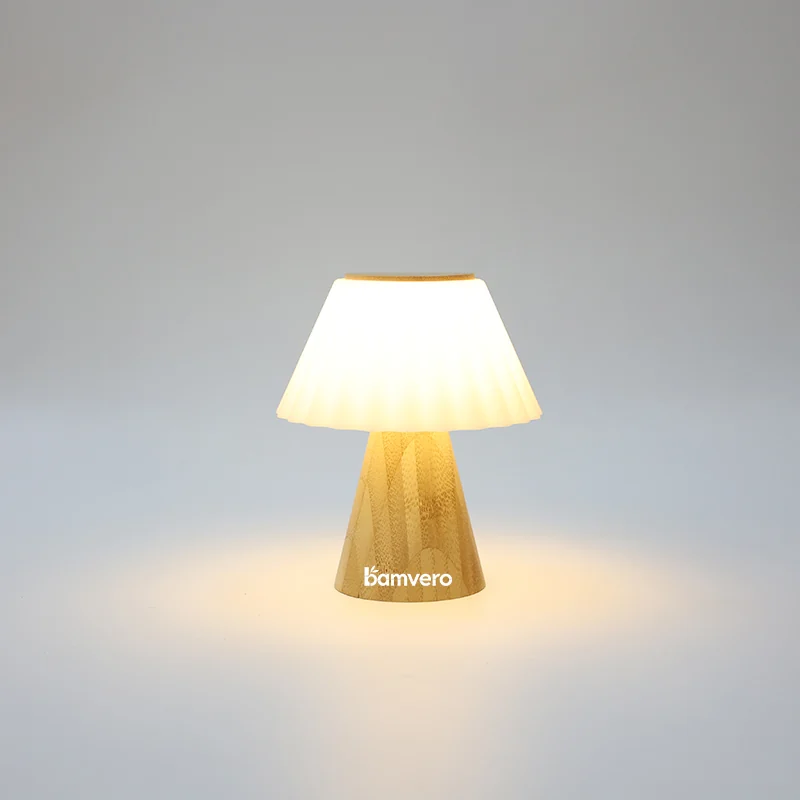
Start with the light off under an agreed, consistent light source. This makes it easier to discuss the material colour without the lamp's own warm light changing the impression. Avoid comparing one sample beside a sunny window with another under a strongly coloured showroom light.
Then switch the lamp on in the agreed configuration. Look again at the shade, joins and overall appearance. This second view serves a different purpose: it helps identify appearance concerns that become noticeable during use. It does not replace electrical, functional or destination-market checks.
Keep the camera position, exposure and background similar when documenting comparisons. Phone photographs are useful for explaining a location or a visible mark, but screen settings and automatic image processing make them a weak final authority for subtle colour decisions. For important finish decisions, retain a physical reference.
Approve a range, not just a favourite photograph
Ask whether representative finish samples can be reviewed before the appearance is locked. If several samples are available, compare the lightest and darkest acceptable examples as well as a typical one. Record whether the range applies to the whole base, an individual face or a particular finish treatment.
Natural grain differences and surface defects are not the same decision. Visible scratches, chipped edges, residue or loose material should be described separately from colour and grain variation. Do not let “natural material” become a catch-all explanation for every issue, and do not promise identical grain across an order.
If the buyer needs a measured colour tolerance, agree on the measurement method, equipment, reference and inspection locations with the supplier. There is no single numerical tolerance that this article can safely assign to every lamp or finish. The acceptance method belongs in the project specification, not in a number copied from an unrelated product.
Make the reference traceable
Give the approved physical sample an identifier and record the model, finish version, approval date and photographs showing relevant surfaces. Agree who retains it and how the supplier will compare production against it. A sample that has been modified, damaged or stored differently should not silently become the new standard.
Logo appearance needs a separate reference when the order includes branding. Position, size and contrast can change how the same bamboo base looks. Review the artwork and the proposed application on the relevant surface through OEM support, rather than assuming a digital mock-up proves the finished result.
When a finish is changed after approval, identify which earlier decisions need to be reopened. A different coating, colour treatment or marking process may need another sample review. The approval record should make the current version obvious to purchasing, production and inspection teams.
Decide how disputed pieces will be handled
Before placing the order, agree on the inspection stage and the evidence needed to raise an appearance concern. Useful evidence includes the unit or carton identifier, a wide view, a close view and the approved reference photographed under comparable conditions. A close-up without scale or location is harder to assess.
Also agree on the next step when a piece falls outside the approved criteria: review, segregation, rework where appropriate, or another agreed disposition. Inspection quantities and acceptance rules should be agreed for the order. This article is not a substitute for a contractual inspection plan or a universal sampling standard.
Bring appearance and function together at sign-off
Finish approval is one part of the release decision. Confirm that the quoted lamp, accessories, instructions and packaging still match the approved configuration. The factory and quality page can support the discussion, while the exact evidence and inspection responsibilities need to be agreed for the project.
For a first inquiry, share the lamp model, quantity, destination, preferred finish and the surfaces most important to your brand. Add photographs of any concern, but mark whether each picture is inspiration, a proposed limit or an approved reference. That gives the supplier a clear starting point for an appearance review instead of an ambiguous request to “match the colour.”
Match the product to the way it will be used.
Align the target channel, product functions, destination market, branding and packaging route before approving a sample or bulk quotation.