
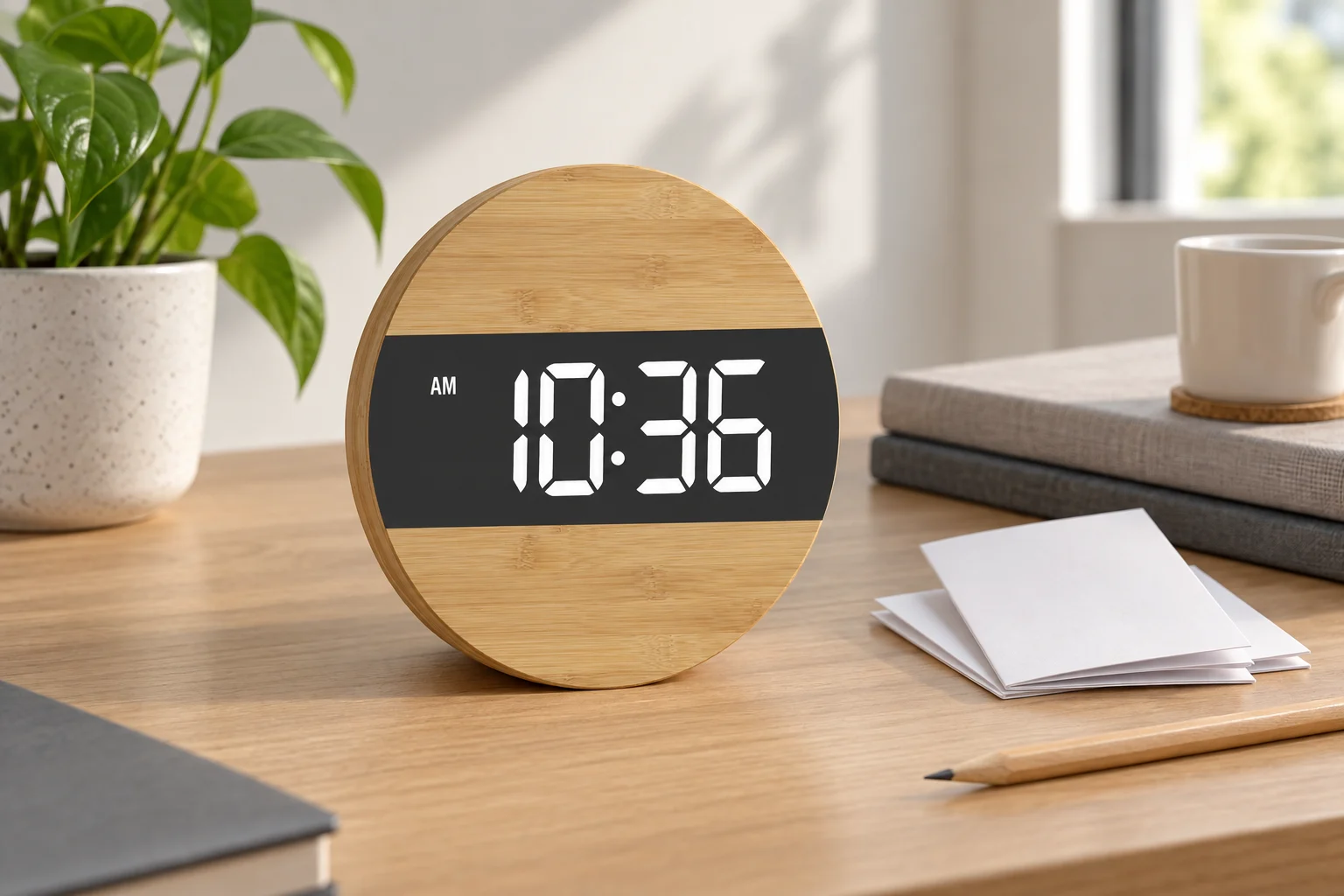
AI-generated sample-review concept based on the product reference, not a factory record or operating diagram. Blank papers are props, not approved instructions.
Bamboo Wall Clock OEM: Approving Instructions Before Printing
Review the instruction sheet with the exact sample, so the words in the box match the controls on the clock.
A wall clock can look finished long before its instructions are ready. The bamboo finish has been approved, the logo looks right, and the display lights up. Then someone tries to set the time using the printed insert and discovers that the button names do not match the sample.
For a private-label order, the instruction sheet is part of the product. It connects the approved hardware to the person opening the box. Reviewing it alongside the clock is more useful than checking a PDF in isolation, especially when several similar models share a catalogue.
Start with one exact model
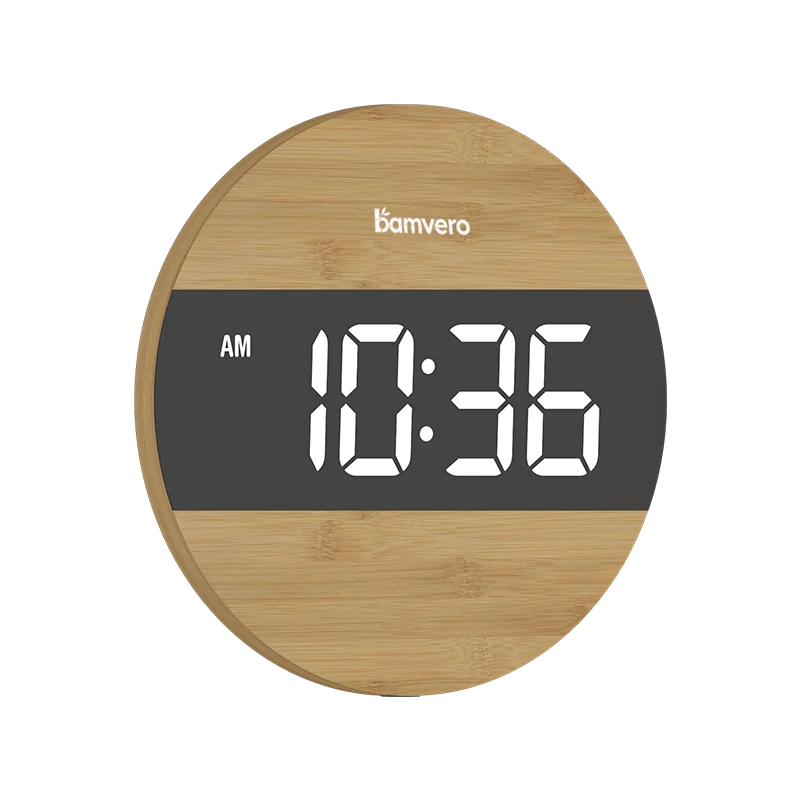
Use a specific sample and its order configuration as the reference. The G218D round bamboo LED wall clock has a central black display panel and a round body. That identifies the front appearance, but it does not establish the names of the controls, the complete setup sequence or what happens after a power interruption.
Keep those details separate from the specifications of a neighbouring model. A similar shape does not mean identical settings, and a feature mentioned for another clock should not slip into the leaflet. A file called “round clock manual” is easy to reuse incorrectly. Include the model, language and revision in the approval record instead.
Write the first-use sequence from the sample
Ask the supplier to demonstrate the exact steps from unpacking to a correctly set display. Record which power accessories are required, what is supplied, and what the user sees before changing any settings. The printed guide should follow that same order rather than begin with every possible function.
Then let a colleague who has not seen the demonstration follow the draft. Avoid helping at the first hesitation: the hesitation tells you where the instruction needs work. Perhaps “press” should distinguish a brief press from holding a control; perhaps the user needs to know which display element should change next. Record the observed behaviour instead of inventing a standard sequence.
Repeat the exercise using the accessories agreed for the order. An instruction that works with the review team's equipment may still leave the recipient unsure what to connect. Input ratings and adapter requirements should come from the confirmed product specification, not a generic charging paragraph.
Match every button name to something visible
A translated button name is only useful if the user can locate it. If the physical control says “SET”, the English instructions should use that same label consistently. A Japanese explanation can describe its purpose while retaining the printed label so the reader can find the correct control.
Where controls are unlabelled, request an accurate annotated photograph or diagram of the approved sample. Check the orientation as carefully as the words. A drawing viewed from the front is confusing if it is meant to explain controls on the rear. Do not use an AI illustration as an operating diagram: a plausible-looking extra button can make the instructions wrong.
Explain wall placement without guessing the hardware
The instructions need to distinguish setting the clock from installing it. Confirm whether the relevant controls remain accessible once it is mounted, how the power cable is routed, and which mounting parts are actually included. These questions affect the order in which the user should prepare and position the clock.
Do not promise that one fixing is suitable for every wall. If installation guidance is supplied, have the responsible supplier confirm it for the quoted product and intended market. The broader clock range can help a buyer compare formats, but each selected model still needs its own installation information.
Check the printed proof, not just the screen
Print the insert at its intended finished size and fold it as it will arrive in the box. Button labels that were comfortable on a laptop can become difficult to read on a small folded sheet. Keep diagrams next to the steps they explain, and check whether a fold splits an important warning or setup illustration.
For a bilingual pack, review the two languages together. The translation should describe the same actions and limitations, not add a capability to make the copy sound smoother. A reviewer should be able to follow either language with the same sample and arrive at the same result.
Release the clock and its paperwork together
Before approving print, retain the final artwork, a photograph of the reviewed sample and the agreed accessory list under the same order reference. Record who approved the instructions and which version should be packed. If a control, accessory or supplied configuration changes later, reopen the affected instructions rather than treating the leaflet as finished forever.
This document review complements, rather than replaces, physical sample approval. One checks that the item meets the agreed brief; the other checks that the recipient can understand the item being supplied.
If you are preparing a bamboo wall clock order, send the model, destination language, quantity and current artwork through the inquiry button. Those details give us a practical starting point for discussing the sample and documentation that need approval, without guessing your packaging or supply requirements.
Match the product to the way it will be used.
Align the target channel, product functions, destination market, branding and packaging route before approving a sample or bulk quotation.