


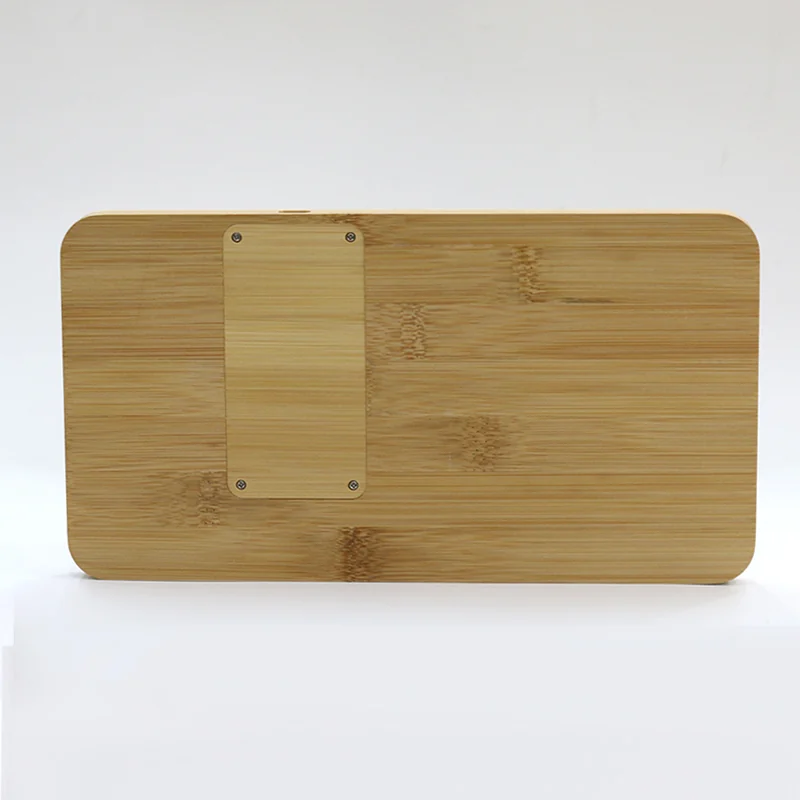
For many buyers, a bamboo wireless charging desk clock is no longer a simple clock with an added charging pad. It is a compact desk accessory, a corporate gift item, a hotel room convenience product and a retail shelf story in one small format. That is why the sample review should cover more than appearance: charging position, LED readability, bamboo finish, logo placement, packaging and repeat-order records all need to be checked before bulk production.
1. Start from the desk-use scenario
The best model depends on where the buyer expects the product to live. A corporate gift buyer may care most about logo visibility and gift-box presentation. A hotel buyer may want stable placement, simple operation and a calm bedside look. A retail buyer needs a clear product name, strong front image and packaging copy that explains the wireless charging and clock functions quickly.
2. Confirm charging layout before styling
Wireless charging is the main selling point, but it is also where many sample problems appear. Buyers should test phone placement, pad alignment, charging response, cable direction and the distance between the display and the charging area. If the product also includes a pen holder or desk organizer area, check whether the added function improves daily use or only makes the product look busy.
- Test the charging pad with the phone models common in your market.
- Check whether the phone can sit naturally without covering the LED time display.
- Confirm cable exit direction for desks, hotel bedside tables and retail photos.
- Ask for production photos after logo approval so the charging pad and display remain aligned.
3. Check LED readability and clock functions
A bamboo electronics product still needs to behave like a reliable clock. Review LED brightness, display angle, time format, alarm setup, temperature display and button logic. If the sample will be used for hotel rooms or corporate gifts, the product should be easy to explain in one short manual card. Complicated setup steps often lead to complaints even when the product looks good in pictures.
For wholesale orders, record the approved display color, time format, power input, manual language and battery memory requirement. These details should be written into the sample approval sheet and reused for repeat orders.
4. Review bamboo finish, logo position and packaging together
Bamboo gives the product its warm, eco-conscious appeal, but the finish must be consistent enough for gift and retail channels. Check surface smoothness, edge treatment, color difference, logo contrast and how the product looks under warm indoor light. Packaging should be reviewed at the same time because a good bamboo clock can look ordinary if the gift box and carton marks are not planned.
5. Build the approval record for repeat orders
A first sample is useful only if it becomes a repeatable production reference. Keep front, angle, side and packaging photos with the approved artwork file. Also record the target market, voltage or plug expectations, manual language and carton labeling. This turns a nice sample into a controlled OEM program.
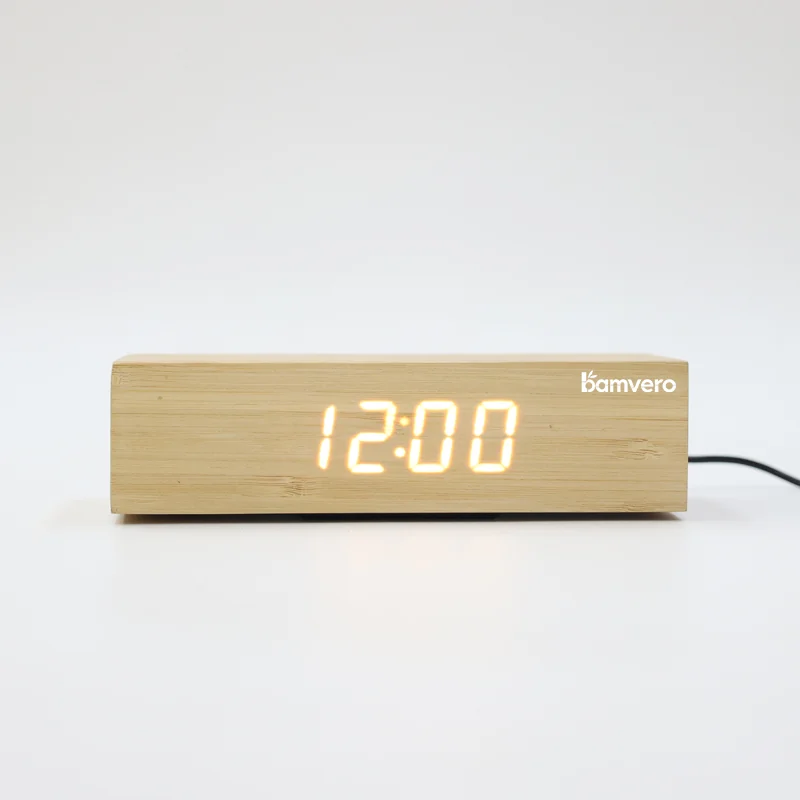
Sample review checklist
- Desk scenario and buyer channel
- Charging pad position and cable direction
- LED brightness, alarm, time format and manual language
- Bamboo finish, logo method and gift-box copy
- Export carton marks, packing photo and repeat-order record
Related sourcing path
If you are comparing this product line, start with the wireless charger clock category, then compare models such as the W119 desk organizer clock and the W118 bamboo wireless charging clock. When the usage scenario is clear, send your quantity, market and logo plan through the B2B inquiry form.
Documents to request before the sample ships
A buyer can avoid many sample misunderstandings by asking for a small document set before the factory sends the first unit. For a bamboo wireless charging desk clock, the useful documents are not complicated: a model specification sheet, a charging layout drawing, a logo position mockup, a package dieline or box reference, and a carton packing note. These documents make it easier for purchasing, marketing and quality teams to review the same product without relying only on chat screenshots.
If the item will be used as a corporate gift, also ask whether the supplier can prepare a neutral specification sheet for your sales team. This is helpful when the final buyer is a hotel group, distributor, event agency or promotional product reseller that needs to show the clock internally before placing a bulk order.
Common approval mistakes in bamboo clock projects
The most common mistake is approving a sample because the bamboo finish looks good in the first photo. Bamboo electronics still need electronic and packaging checks. Confirm the charging pad works with common phone cases, check whether the LED brightness is comfortable at night, test the cable direction on a real desk, and review how the gift box protects the bamboo surface during export shipping.
Another mistake is leaving the logo discussion until after the sample is approved. Logo size, contrast and placement can change the way the product feels. For desk organizer clocks, a small logo on the bamboo base may look premium, while a large logo can make the item feel like a giveaway. Ask for at least one conservative logo option and one visible promotional option before deciding.
How to brief Bamvero for a faster quotation
When sending an inquiry, include the model family, estimated quantity, target market, branding requirement and packaging style. If the order is for a gift program, share the event date or delivery window. If it is for retail, share whether you need barcode labels, multilingual packaging, instruction manual language or carton marks. A clear brief lets the supplier recommend a realistic sample path instead of sending a broad catalog.
Sourcing expert advice
For bamboo electronics, the strongest wholesale program usually combines a clear daily function with a natural material story. Do not approve the sample only by front appearance. Approve it as a full supply package: function, surface, logo, packaging, manual and carton. That is the difference between a nice photo and a product that can support repeat B2B orders.