
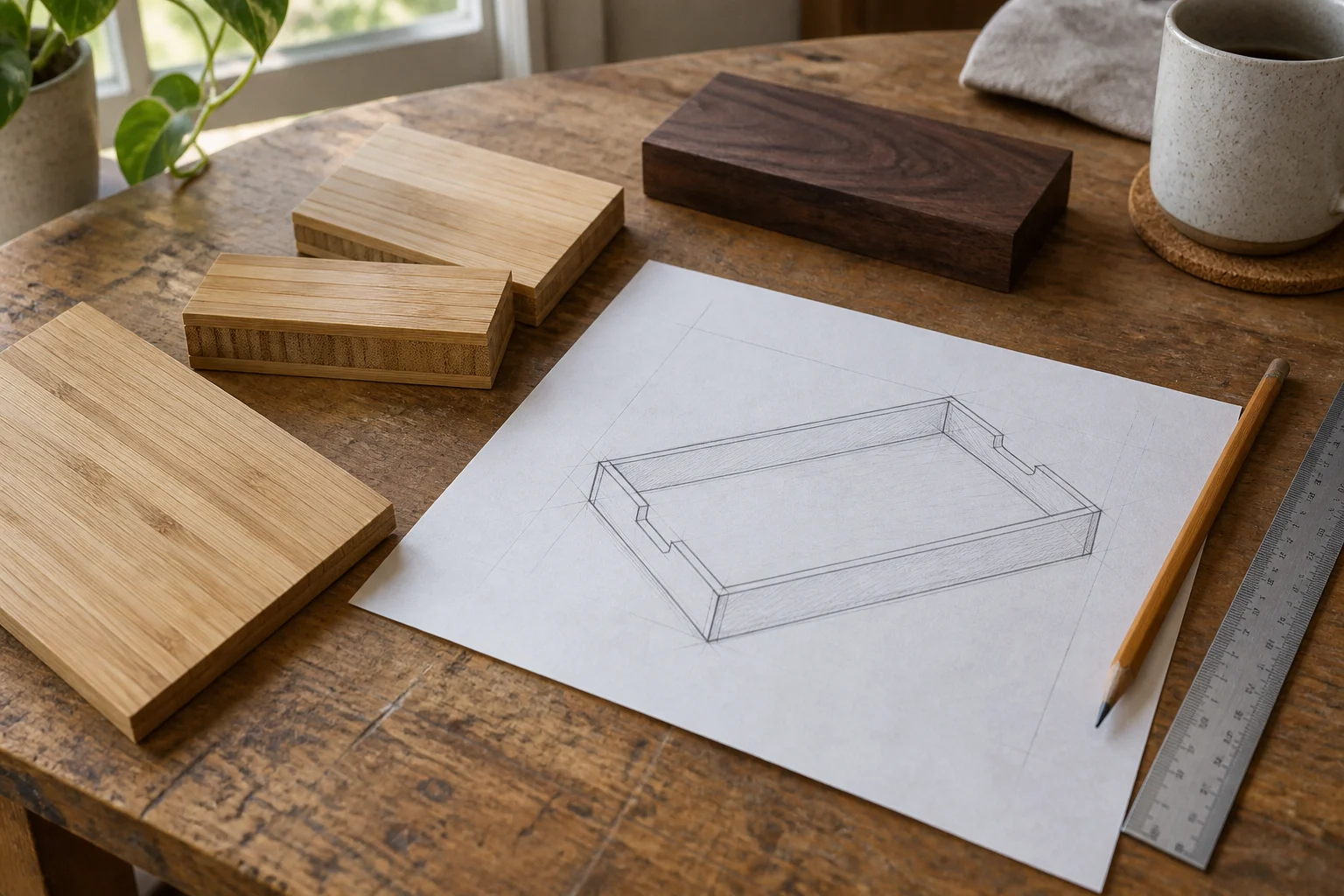
AI-generated development concept, not a Bamvero factory record, approved design or specification. Materials and sketch are illustrative.
Custom Bamboo and Wood Products: What a Reference Photo Cannot Tell You
A reference photo can start the conversation. A clear use case and a few critical dimensions help turn it into a project worth reviewing.
A buyer sends a photograph of a desk accessory and asks, “Could we make something like this in bamboo?” It is a useful starting point. The picture gives everyone something concrete to discuss, even when there is no drawing or finished specification yet. What it does not provide is a reliable basis for promising a price, a production method or an exact match.
The next step is not necessarily a full technical drawing. It is a short development brief that explains what you like about the reference and what the object needs to do. For a project outside the current Bamvero product range, that conversation helps establish whether the idea is suitable for a feasibility review before either side invests in detailed artwork or samples.
Explain the idea rather than asking for an identical copy
Start with the reason you chose the picture. Perhaps the rounded edges suit your brand, the divided storage fits a particular set of accessories, or the overall footprint would work on a small desk. These are different requirements. If the supplier only hears “same as the photo,” the feature that matters most to you may be missed.
A useful first message could say: “We are developing a desk tray for a stationery collection. We like the low profile and two compartments in this reference, but want our own proportions and branding. It needs to hold the pen and card sizes attached.” That is an illustrative brief, not a description of a completed Bamvero project. It turns a visual preference into something that can be assessed.
Use your own design material or references you are entitled to share. Explain whether the picture is an inspiration, an existing product you own or a design your team has developed. Do not treat another company's logo, artwork or distinctive design as an instruction to reproduce it.
Add the measurements that affect everyday use
A photograph does not establish scale. A narrow slot may look generous until someone tries to place a phone with a case inside it. A tray that looks compact from above may be too deep for the shelf where it will be sold. Start with the maximum available space and the objects the product must hold.
For a storage product, internal dimensions can matter more than the outside dimensions. Include the largest item that must fit, the opening it needs to pass through and whether it will be removed with one hand. If those measurements are still unknown, identify them as open questions rather than entering guessed numbers into a specification.
An annotated photograph is often enough for this first discussion. Mark the critical width, depth and height, and distinguish a requirement from a preference. For example, the maximum shelf depth may be fixed while the corner radius remains open to a manufacturing recommendation. Detailed tolerances belong in the later technical review, not in assumptions drawn from perspective.
Separate the appearance from the material construction
“A wood look” is not a complete material specification. Solid wood, laminated bamboo and a wood-effect surface can look similar in a small image while representing different constructions. Ask what the visible parts would actually be made from and how the proposed construction relates to the intended use.
Photographs also vary with lighting, editing and the screen used to view them. They can communicate a broad preference for a lighter or darker finish, but a physical finish sample is more useful for agreeing on an acceptable appearance. Discuss which faces will be visible and where natural variation is acceptable. Do not promise that every unit will have identical grain.
For ideas involving electronics, separate the housing discussion from the function discussion. A cavity that works visually in a sketch still needs review for the selected components, connections, access and assembly. Changing the outside material does not automatically mean that an existing electronic configuration will fit or perform unchanged.
Compare a new concept with an existing model
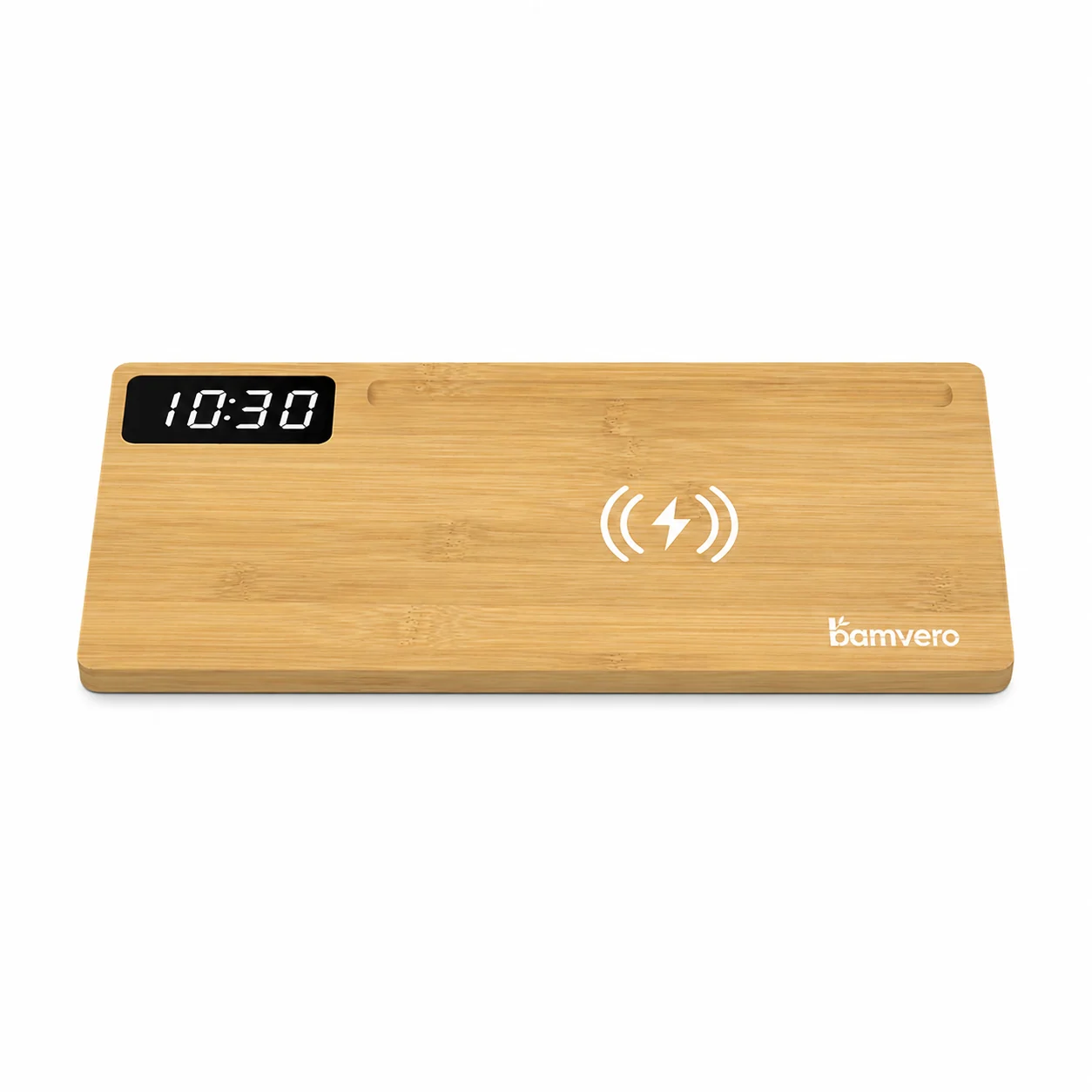
An existing product can help explain the boundary between a cosmetic change and a new development. The W110A organizer charging clock, for example, has a low rectangular body, a visible time display, a long recessed slot and a marked charging area. Those visible features provide a specific starting point for a discussion.
Requesting a logo on an agreed surface is a different project from changing that body's dimensions, repositioning the charging area or adding a storage compartment. Even a small-looking change may affect the internal layout or assembly. Ask which requests can be reviewed against the existing model and which need a separate feasibility assessment.
The photograph in this article is not a specification for a new version of W110A. Use the current product page to identify the model, then confirm the proposed changes through OEM and customization support. Charging compatibility, supplied accessories and the final construction should be agreed for the quoted version.
Give the sample a specific question to answer
Instead of asking for “a perfect sample,” decide what you need to learn first. An early shape model might help evaluate size and handling without proving the final finish or electronic performance. A later functional sample may answer a different set of questions. Agree on what each sample represents before judging it.
Keep feedback tied to the same annotated reference. “The opening needs to accept this item” is more actionable than “please make it better.” Record the changes that have been accepted and those that are still under review, so a revised image does not quietly become a new production instruction.
Once the concept and supply scope are clearer, the bamboo electronics RFQ guide can help organize the later quotation stage. Initial quantity, destination, packaging expectations and target timing still matter, but none of them should turn an unreviewed sketch into a guaranteed production commitment.
If you only have a reference picture today, that is enough to begin a focused conversation. Share the intended use, the parts of the design that matter, approximate dimensions and anything you already know about quantity or delivery. Bamvero can review the idea and discuss a possible next step; feasibility, sample terms and production conditions must be confirmed for the individual project.
Match the product to the way it will be used.
Align the target channel, product functions, destination market, branding and packaging route before approving a sample or bulk quotation.