
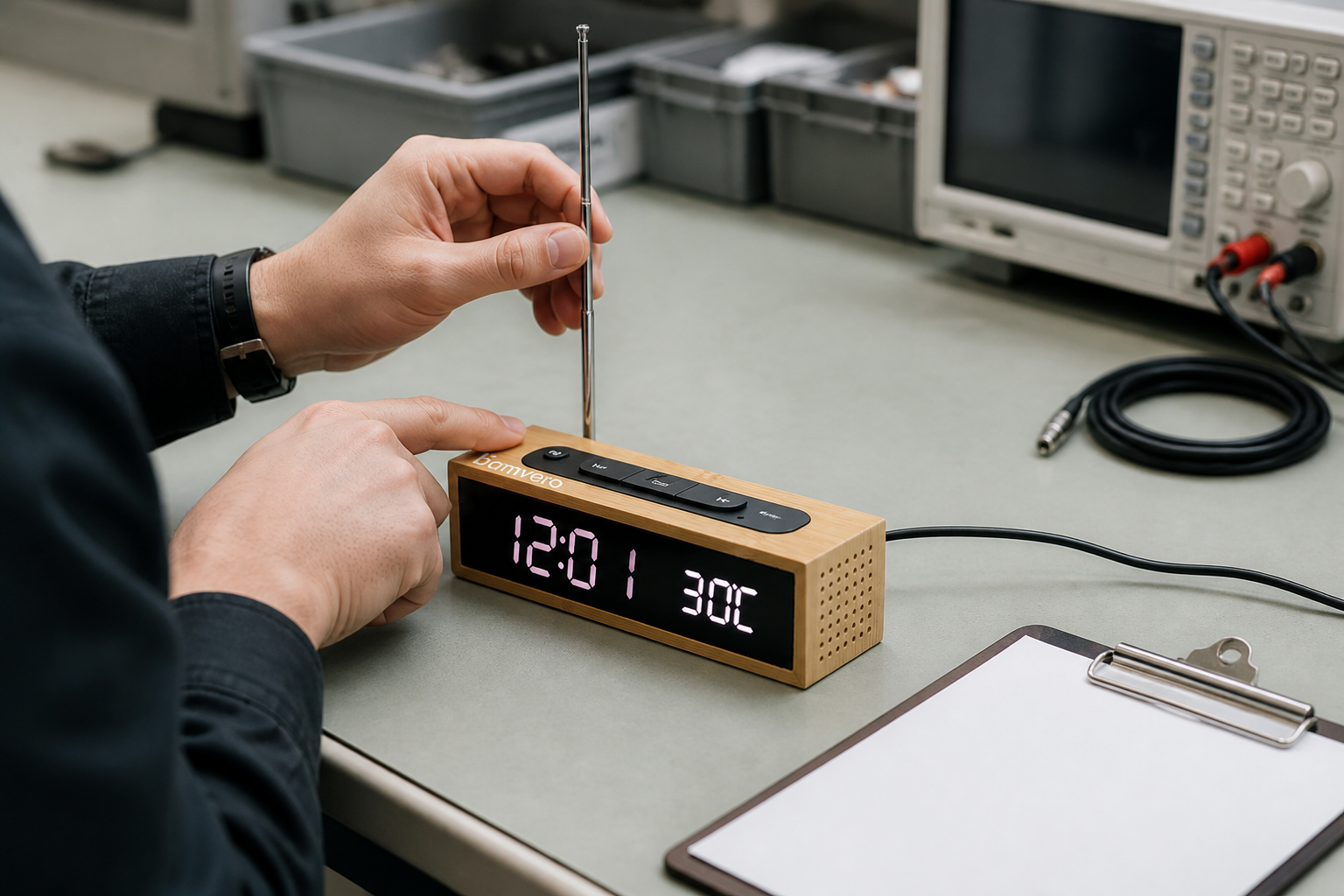
2609B Bamboo FM Radio Alarm Clock OEM: Functional Validation Guide
Validate the real 2609B sample under destination-market radio conditions before approving branding, packaging and production.
Turn the Product Brief Into a Test Matrix
An OEM radio-clock project should begin with the destination market, intended user, operating environment and approved feature list. Convert those decisions into a test matrix before requesting a production sample so every reviewer checks the same product version.
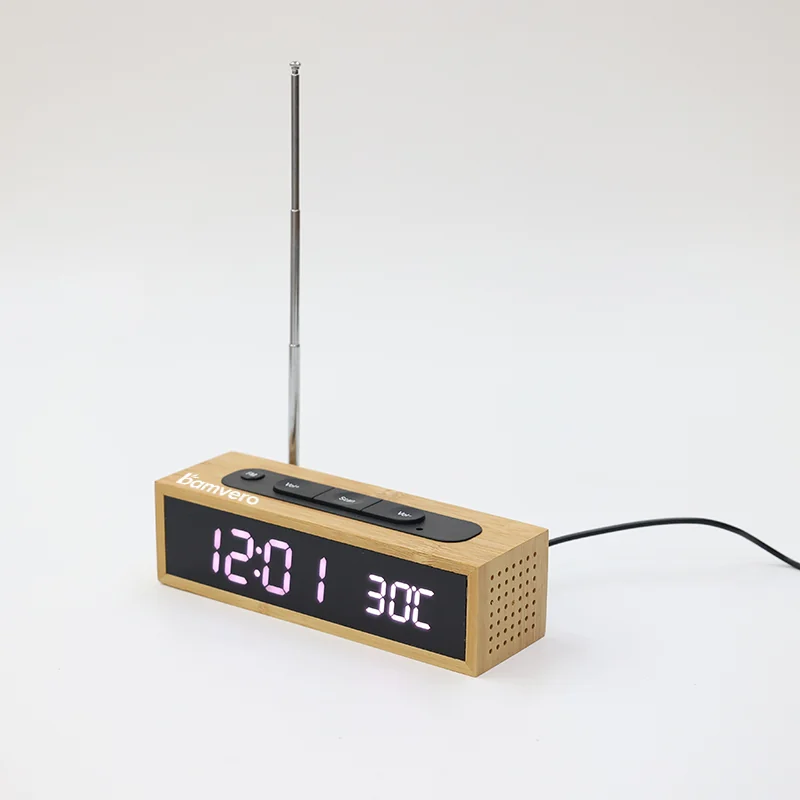
Use the 2609B bamboo FM radio alarm clock as the controlled model reference. Its visible bamboo housing, large LED display, temperature display, top controls and telescopic antenna should be tied to one dated specification rather than described differently across quotations, manuals and packaging.
Define the Destination-Market Radio Conditions
Confirm the required FM frequency settings, channel steps, language and power configuration for the sales country. These are market-specific order details and should be written into the sample request instead of assumed from a catalogue page.
Test reception in several realistic positions, including near a window, beside common desk electronics and farther inside the room. Record the station, antenna position, audio stability and any interference so supplier and buyer can repeat the same check.
Evaluate the Antenna and Reception Together
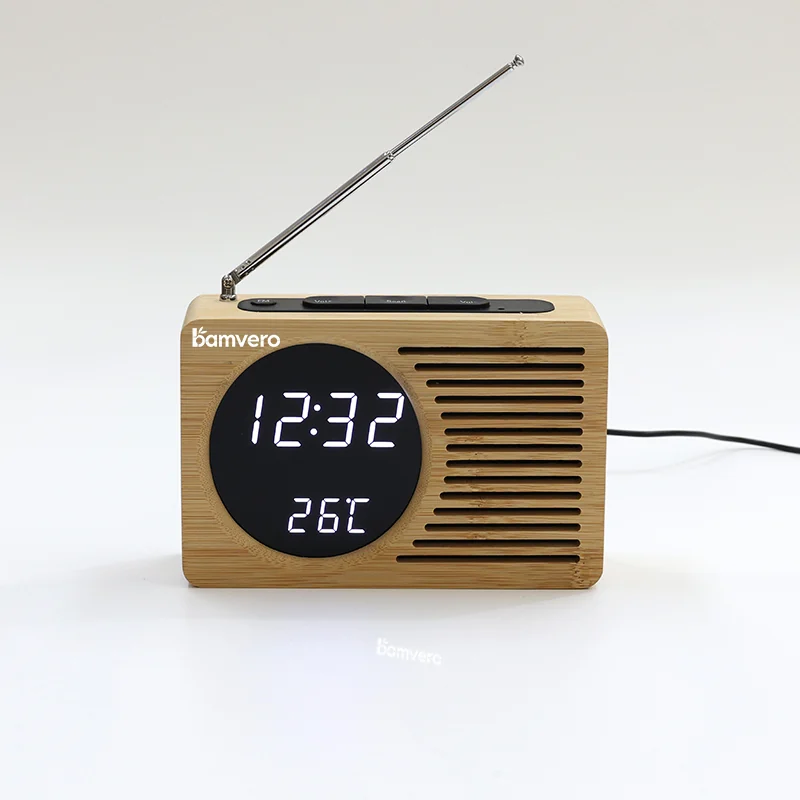
Extend and rotate the telescopic antenna through normal positions without forcing the joints. Check that it remains stable, stores cleanly and does not interfere with nearby objects when the clock is used on a shelf or desk.
Compare the result with the 2602 bamboo radio alarm clock only when both samples use the destination-market settings. A front photograph cannot show reception quality, so the comparison needs the same location, station list and operating procedure.
Test Controls Without Memorized Steps
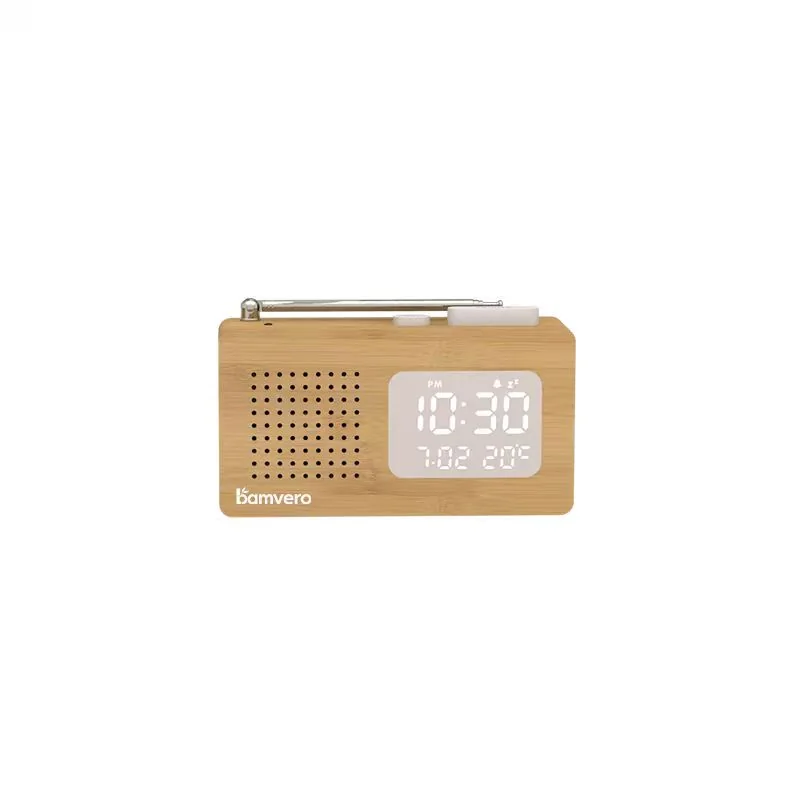
Ask several first-time users to tune the radio, change volume, set the time and prepare an alarm using only the proposed quick-start instructions. Record where they hesitate, press the wrong key or cannot identify the current mode.
The 2605 compact bamboo radio alarm clock offers a different compact control layout. Comparing user actions across two real samples is more useful than judging button count from product images.
Check Display and Alarm Behavior in Real Lighting
Review time and temperature visibility in daylight, normal room light and a darker environment. Confirm which indicators are visible in each mode and whether the display can be read from the intended distance and viewing angle.
Run repeated alarm tests using the exact approved sample. Record setup, trigger, stop and reset behavior, then confirm what happens after the selected power source is disconnected and restored. Do not place an unverified backup or memory-retention claim on packaging.
Keep Product Boundaries Clear
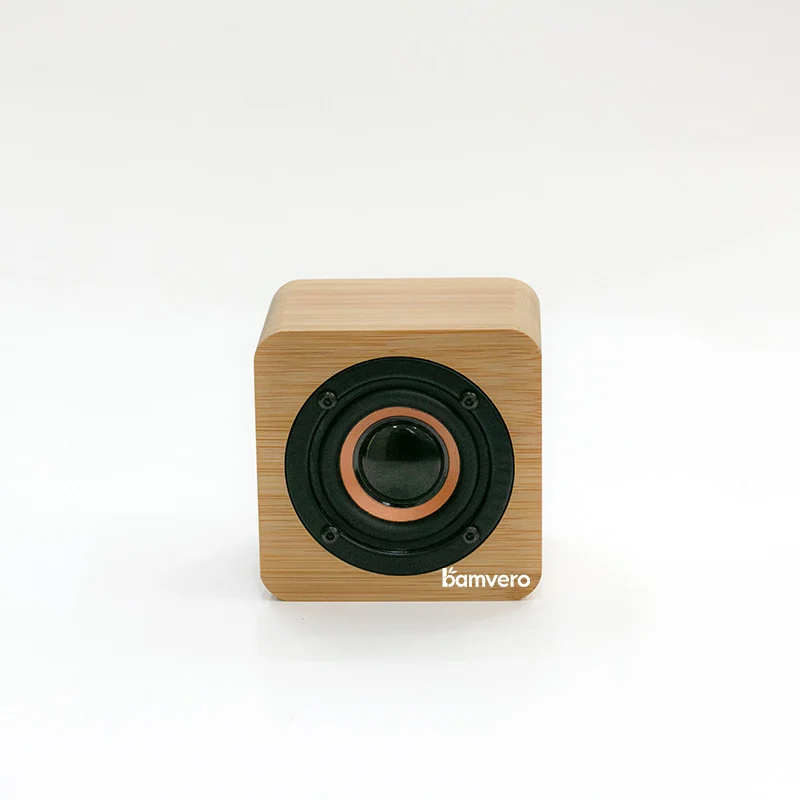
A radio alarm clock and a Bluetooth speaker clock solve different buyer jobs. The Y103N bamboo Bluetooth speaker clock can be used as a category-boundary comparison, but its audio source and customer demonstration should not be copied into the 2609B specification.
List required functions and excluded functions in the approval record. Clear exclusions reduce quotation drift and help factory inspection distinguish an intentional model choice from a missing feature.
Control Bamboo Finish and Assembly
Review several units under consistent lighting and define an acceptable range for bamboo grain and tone. Separate natural variation from workmanship issues such as cracks, splinters, rough openings, excess adhesive, uneven gaps or loose controls.
Add antenna movement, button feel, display alignment, base stability and cable fit to the inspection sheet. Each result should identify the model revision and sample date so later production checks use the approved evidence.
Approve Branding, Manual and Packaging as One Pack
Check the physical logo sample on the finished bamboo surface rather than approving artwork alone. Verify contrast, position, size and orientation together with the display and control layout.
The manual should match the actual button sequence, radio settings, alarm behavior and included accessories. Use the OEM pilot-run checklist to connect the approved sample, packaging files and production records before mass production.
Send a Validation-Focused OEM Inquiry
Prepare the target country, estimated quantity, required radio settings, display and alarm requirements, logo method, package language, accessories and test expectations. Include the exact 2609B product link so the inquiry does not become a generic radio-clock request.
Bamvero can then prepare a sample and validation plan around the confirmed market and model boundary. This gives the buyer a clearer basis for approval, quotation comparison and production inspection.
Build the specification before comparing the final price.
Align the target channel, product functions, destination market, branding and packaging route before approving a sample or bulk quotation.