Custom Bamboo Wireless Charger OEM: Logo, Packaging and Sample Approval
Use this buyer workflow to align the base model, charging configuration, bamboo logo result, packaging and approval record before authorizing production.
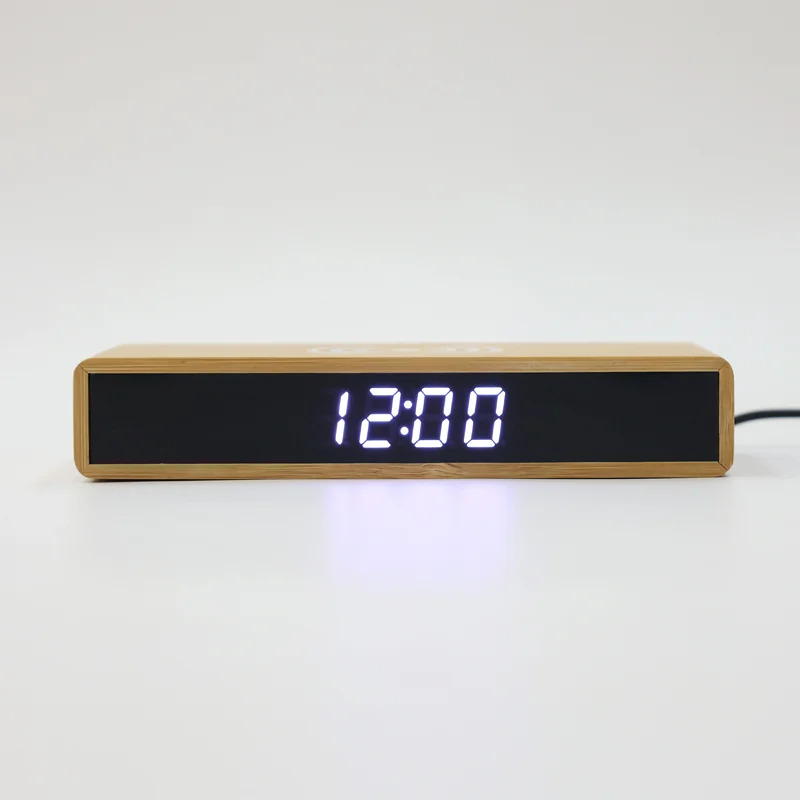
Before approving a custom bamboo wireless charger, review W101 bamboo wireless charging clock, W118 bamboo wireless charging clock, W125 charging pen-holder clock and confirm the requirements for your project.
Who This Guide Is For
This guide is for brand owners, product managers, importers and promotional-product buyers who want to develop a custom bamboo wireless charger without allowing the logo, packaging and electronics configuration to drift apart during sampling.
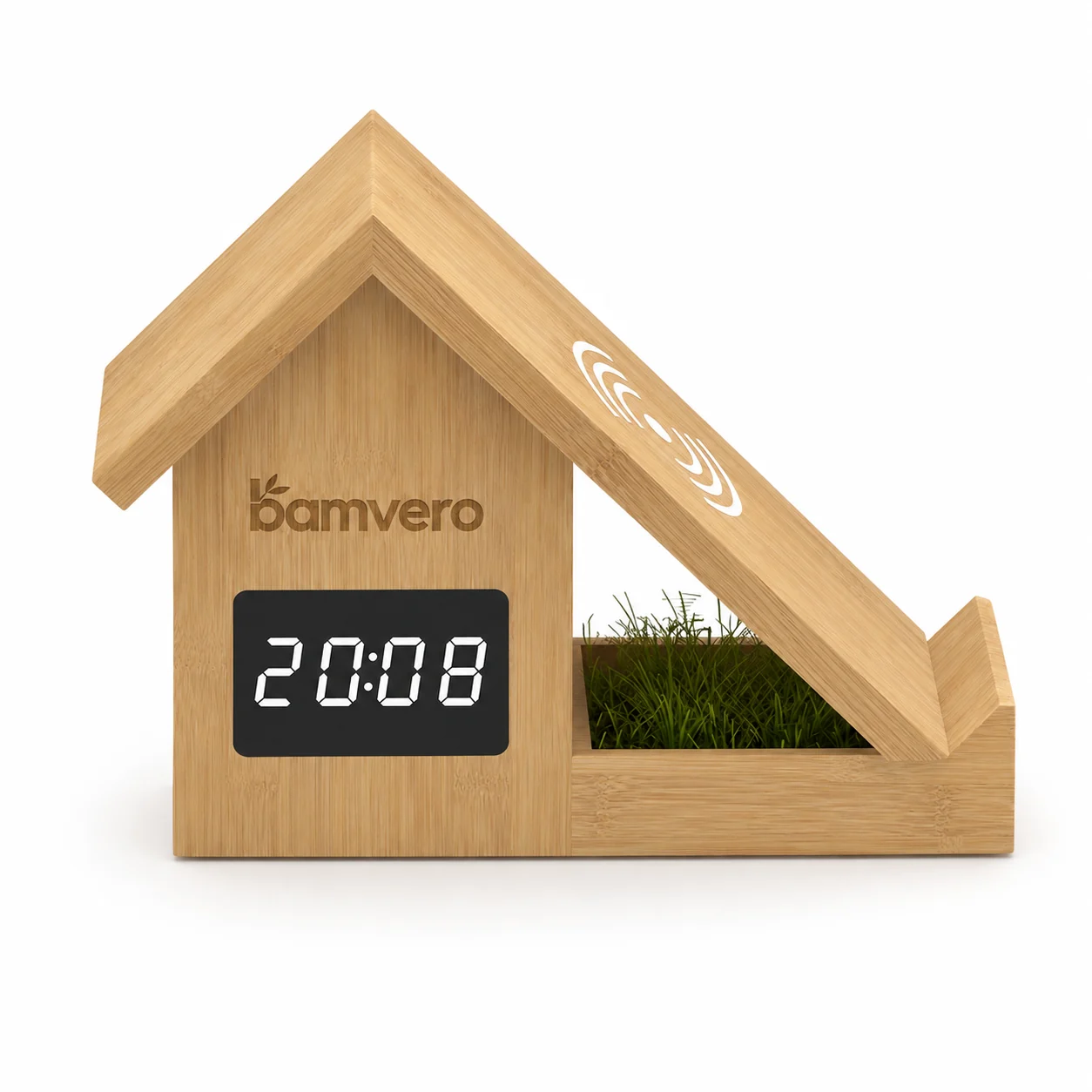
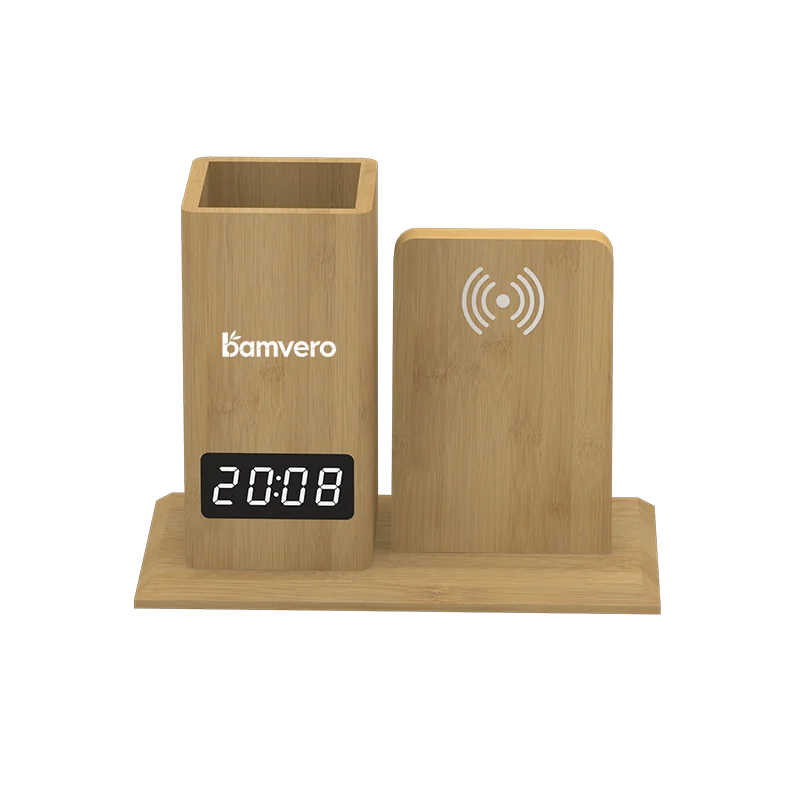
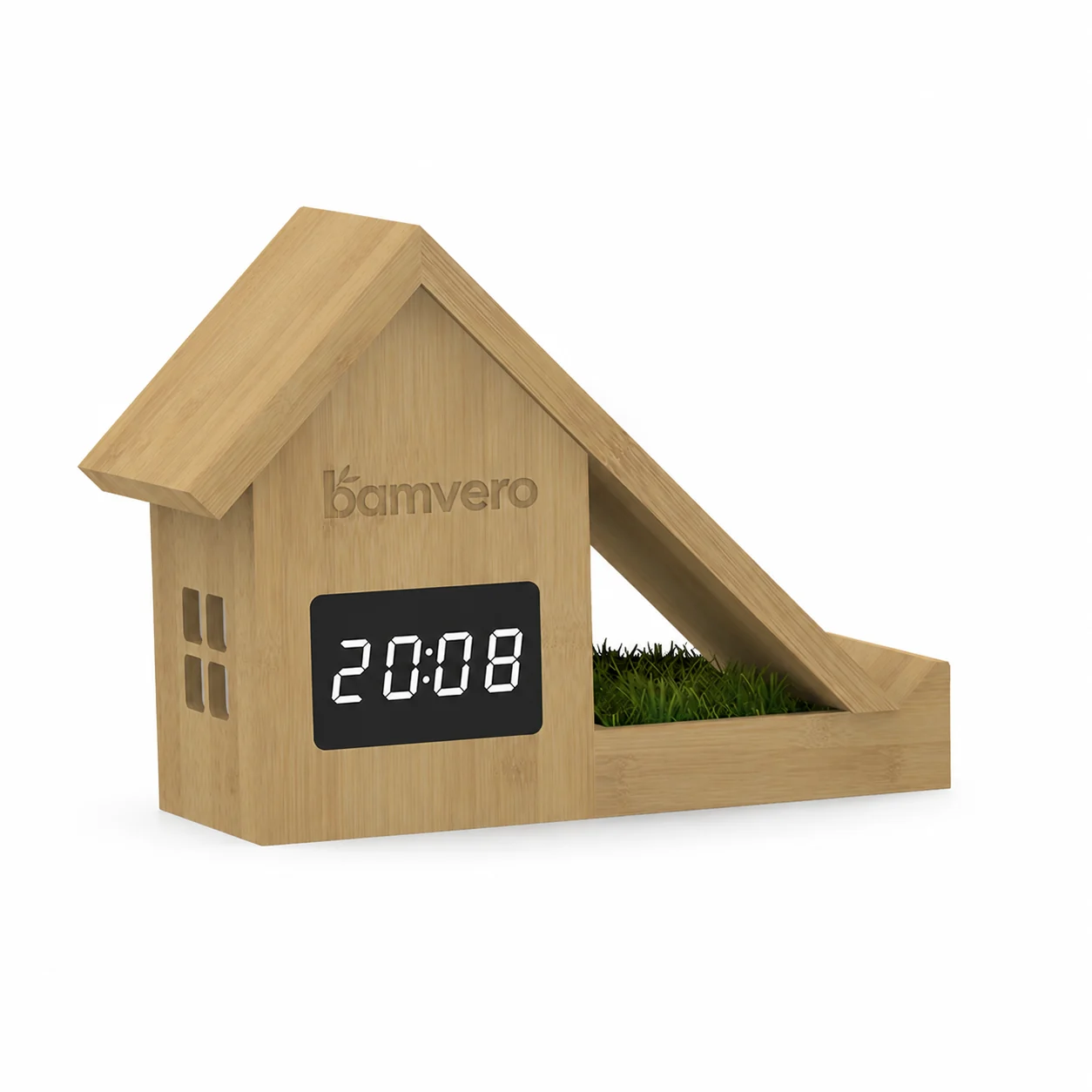
The first decision is not the logo method. It is the product format. A compact charging clock such as W101 solves a different desk problem from the taller W125 charging pen-holder clock or the house-shaped F011 charging clock. Once the base model is selected, the buyer can create one controlled approval file covering the exact unit, artwork, power requirement, packaging and sample test results.
The confirmed product information below comes from the current Bamvero model pages. Charging compatibility, input adapter, certification status, logo process, MOQ, lead time and warranty still need to be confirmed for the exact quotation.
Quick Decision Guide
| Model | Confirmed product facts | Useful project direction | Items to confirm on the quotation |
|---|---|---|---|
| W101 | Natural bamboo, 15W wireless charging, 160 x 75 x 29 mm | Compact charging-clock program with a relatively low profile | Display functions, input supply, included accessories and tested devices |
| W118 | Natural bamboo, 15W wireless charging, 160 x 75 x 40 mm | Charging clock where the buyer wants a deeper body than W101 | Exact control layout, display behavior, cable and adapter requirement |
| W125 | Natural bamboo, 15W wireless charging, 188 x 95 x 143 mm | Office-gift or desk program combining charging and vertical storage | Pen-holder capacity, logo area, packaging footprint and phone placement |
| F011 | Natural bamboo, 15W wireless charging, house-shaped form | Gift-led or display-led program that needs a distinctive silhouette | Final project dimensions, artwork position, packaging structure and functions |
Use the table to narrow the format, not to approve a final specification. A model name alone does not define the electronics version, power supply, packaging or market documents.
Choose the Base Model Before Starting Artwork
A custom bamboo wireless charger project becomes difficult when the buyer approves artwork before confirming the physical unit. The logo may fit one front panel but collide with a display window, charging mark or curved edge on another model.
Start with a short written brief:
- target market and sales channel;
- expected use, such as bedside charging, office storage or corporate gifting;
- preferred product model and acceptable alternative;
- devices and phone cases that will be used for sample testing;
- required logo, manual and packaging languages;
- packaging route, such as retail box, presentation box or shipping-focused carton;
- target launch window and the decisions that must be completed before it.
This brief gives the supplier a stable reference for samples and quotations. If the model changes, the artwork and packaging approvals should return to review instead of being copied to the new body.
Lock the Exact Charging Configuration
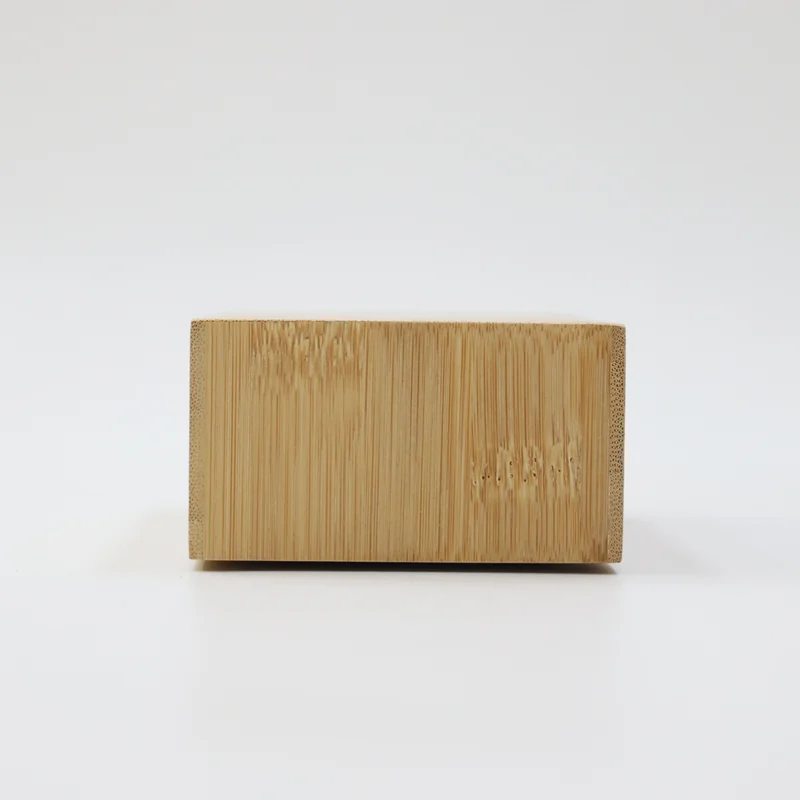
The current model pages identify 15W wireless charging for W101, W118, W125 and F011. That is the product maximum shown on those pages; it is not a promise that every phone will receive 15W.
For the exact sample, record:
- quoted output profiles and required input supply;
- cable and adapter supplied with the unit, if any;
- charging position and alignment guidance;
- representative phones, cases and earbuds cases used in testing;
- indicator behavior and display behavior while charging;
- result when the device is placed incorrectly or removed;
- temperature observations under the agreed test conditions;
- any automatic stop, foreign-object or protective behavior stated in the documentation.
If Qi certification is part of the commercial claim, verify the exact product and brand in the Wireless Power Consortium product database. Do not transfer a certification claim from another model or configuration.
Approve the Logo on the Real Bamboo Surface
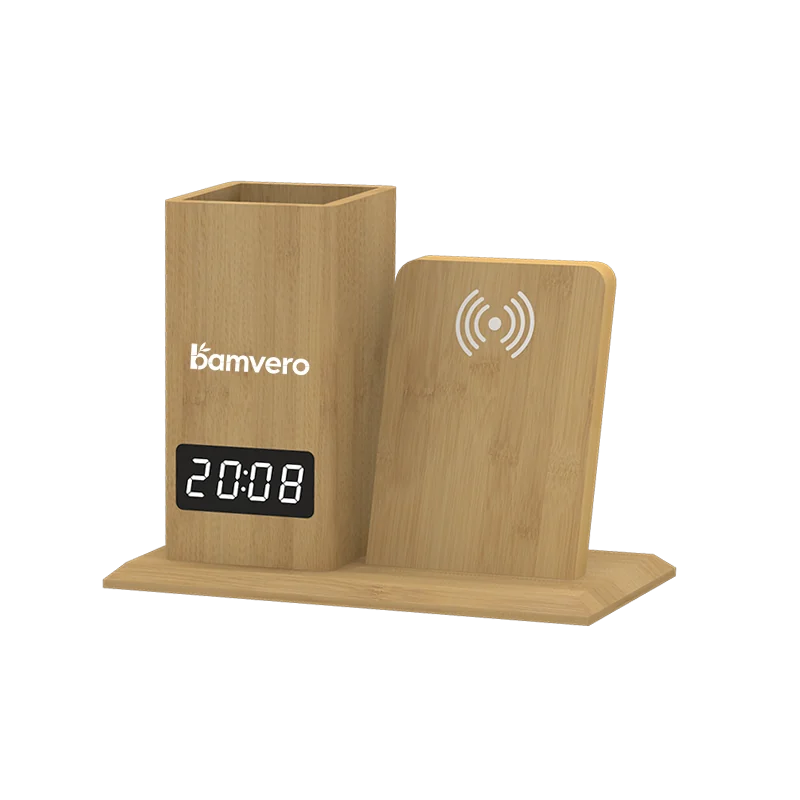
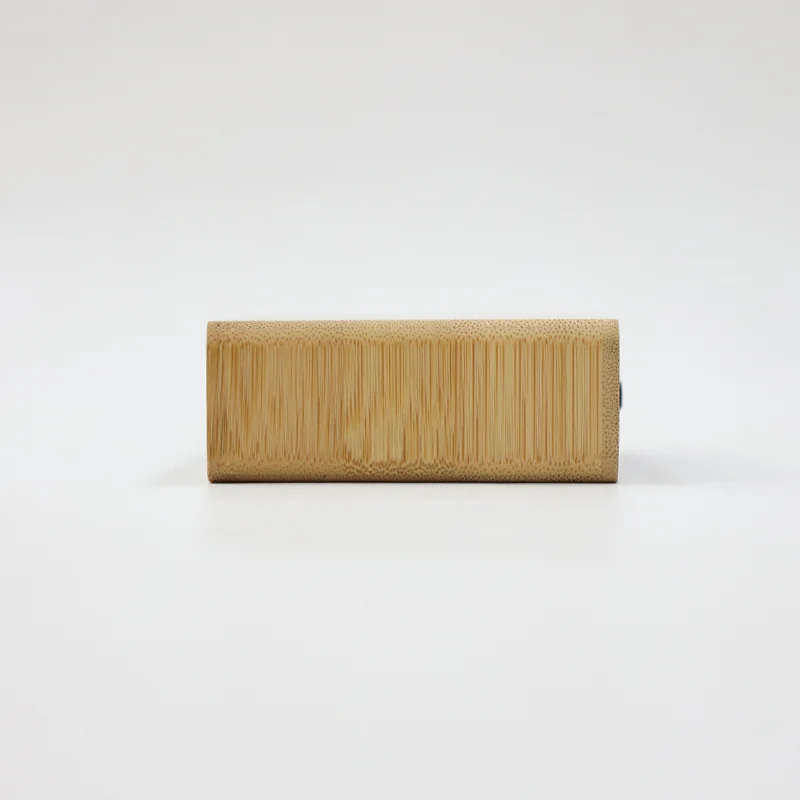
Natural bamboo grain can change the visual result of printing or engraving. A digital mockup is useful for positioning, but it cannot replace a physical sample.
The artwork approval should state:
- artwork file name and revision date;
- logo width, height and orientation;
- position measured from fixed product edges;
- approved method, such as printing or engraving, after supplier confirmation;
- approved color reference when color is used;
- restricted areas around displays, buttons, charging marks and joints;
- acceptable visual range across different bamboo grain patterns;
- rejection criteria for misalignment, weak contrast, splintering or incomplete marks.
Photograph the approved sample from the front, side and top. Keep one close-up that shows the logo against the actual grain. These photographs should be attached to the signed approval record.
Treat Packaging as Part of the Product Specification
Packaging is where product configuration, accessories, instructions and brand claims meet. A correct unit in an incorrect box can still create returns, compliance problems or customer-support questions.
Review the complete pack rather than only the box graphics:
| Packaging item | Approval question |
|---|---|
| Product tray or insert | Does it hold the unit without pressing the display, charging surface or controls? |
| Cable and adapter space | Does the approved accessory set fit securely and match the manual? |
| User instructions | Do the input requirement, controls and charging guidance match the sample? |
| Labels and marks | Are model, power and destination-market details supported by the technical file? |
| Logo and product images | Do they show the approved model and artwork revision? |
| Outer carton | Are quantity, carton marks and protection method confirmed before shipment? |
Ask for a final packed sample when packaging changes are material. Check the opening sequence, product orientation, accessory count and the condition of the bamboo surface after the agreed handling or transport test.
Build One Sample Approval Record
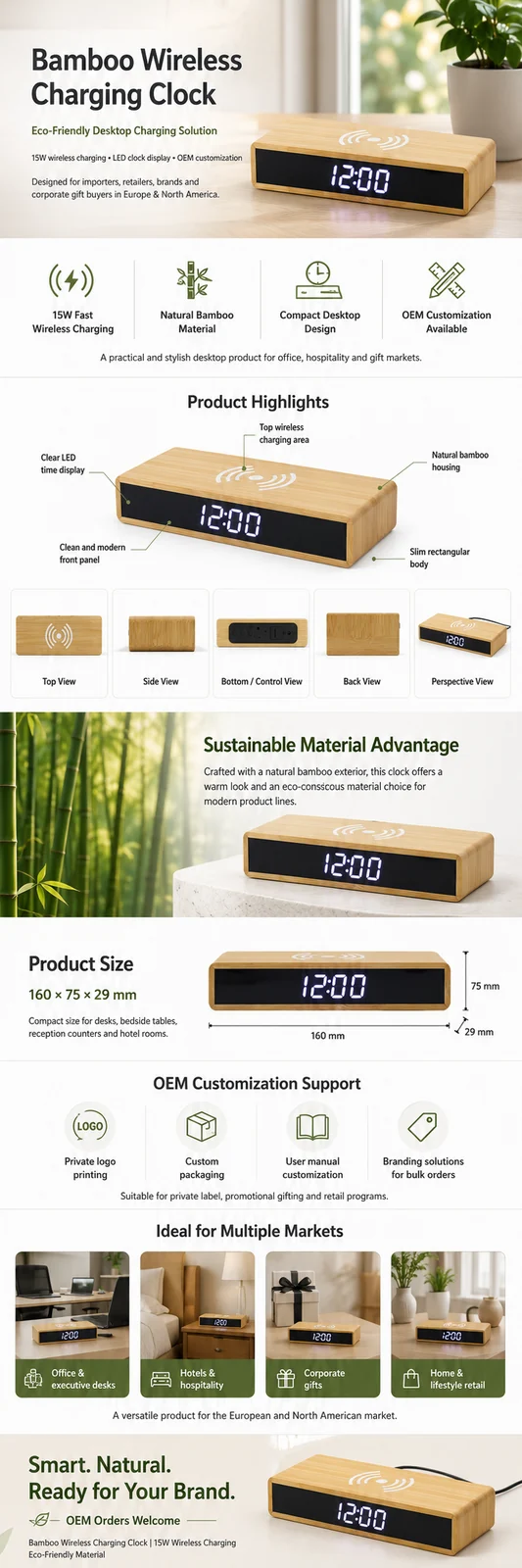
Email comments are easy to separate from the correct sample. Use one approval record with the model, sample code and revision on every page.
The record should include:
- product identity and electronics configuration;
- confirmed dimensions and visible functions;
- charging test method and device list;
- display, clock and control results;
- bamboo finish and assembly observations;
- logo artwork and physical-result photographs;
- packaging, labels, manual and accessory list;
- open issues, correction owner and due date;
- final decision: approved, conditionally approved or rejected;
- names and dates for buyer and supplier sign-off.
A conditional approval should name the remaining change and how it will be verified. It should not be used as a vague instruction to “improve in production.”
Keep the Approved Sample Connected to Production
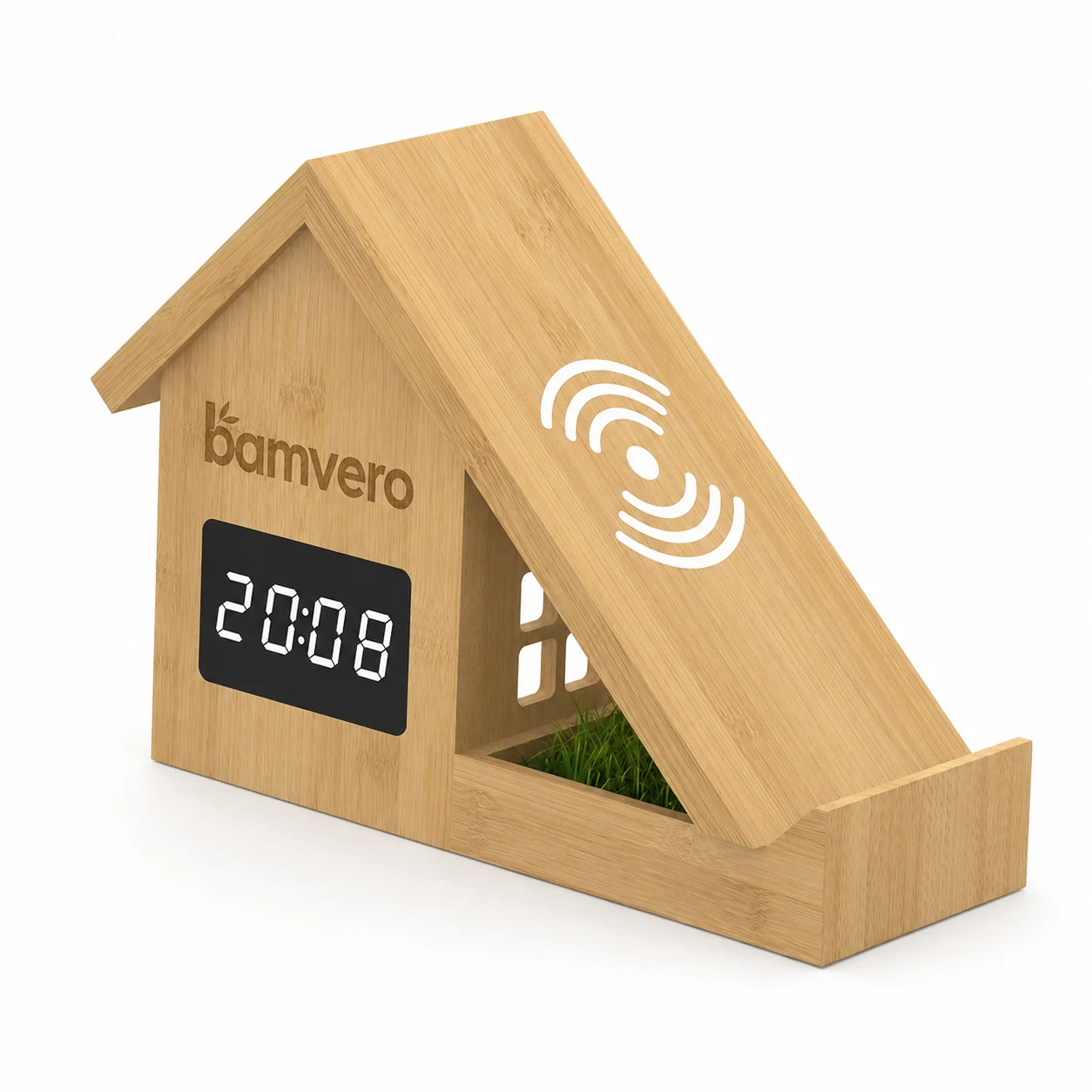
The approved sample is useful only when production receives the same controlled information. Before the production release, ask the supplier to confirm that the bill of materials, charging module, housing, finish, artwork, packaging and accessories match the approval package.
For inspection, convert the approval record into observable checkpoints. Examples include product model, dimensions, logo position, surface defects, display operation, control response, charging behavior on the agreed devices and accessory count. Agree defect categories, the sampling plan and remedies in writing with the supplier or inspection provider.
If a component or packaging material changes after approval, record the change and decide whether a new sample or partial reapproval is needed. This is particularly important when the change affects power, charging behavior, user instructions or market documentation.
Common Approval Mistakes
Approving only a rendered logo image
A rendering does not show grain contrast, edge position or the result of the actual decoration process. Approve a physical logo sample.
Using one test phone
One successful charge does not describe the target market. Define a representative device and case list for the intended channel.
Leaving the power supply unclear
The charger, cable and adapter work as a system. Record the required input and what is included in the box.
Treating packaging as a later design task
Late packaging changes can alter instructions, accessory placement and carton data. Review packaging before the production release.
Copying certification claims between models
Documents must cover the exact model, electronics, brand and destination-market claim. Verify scope before publishing or printing the claim.
Information to Send With the RFQ
A useful request for quotation should make the remaining decisions visible. Attach the selected model link or reference image, target market, expected quantity range, required charging use, representative test devices, logo file, preferred packaging and launch schedule. State whether the buyer needs a cable, an adapter, retail packaging, individual gift packaging or only export protection.
Ask the supplier to return the quotation with open items highlighted. The response should identify the exact model and configuration, included accessories, customization scope, sample route, packaging assumptions, carton data, document scope, lead time basis, quote validity, warranty terms and claim process. If a value depends on final artwork or a sample result, it should remain conditional instead of being presented as fixed.
This approach makes quotations easier to compare. It also prevents a low price from being mistaken for a like-for-like offer when the accessory, packaging or document scope is different.
Final Buyer Checklist
- Confirm one base model and one controlled configuration.
- Record dimensions, visible functions and all accessories.
- Define the charging device list, cases, input supply and test method.
- Approve the logo on a physical bamboo sample.
- Approve the manual, labels, inner packaging and outer carton together.
- Separate confirmed product facts from open supplier questions.
- Attach sample and packaging photographs to the approval record.
- Define inspection checkpoints and remedies before production.
- Reapprove any change that affects electronics, artwork, packaging or documentation.
- Send the supplier the final signed revision before authorizing production.
When requesting a custom bamboo wireless charger proposal, provide the target model, destination market, estimated quantity, required functions, device test list, logo file, packaging direction and target schedule. Bamvero can then prepare a focused model and sample route instead of a generic quotation.
Related sourcing resources
Methodology and official references
Product facts are based on the current Bamvero model pages. Confirm the exact quoted configuration, included accessories, certification status and destination requirements before ordering.
Frequently asked questions
Which base model should a custom bamboo wireless charger OEM project use?
Choose from the target use, required footprint, charging format and retail position. Confirm the exact model code and electronics configuration before artwork begins.
Can the logo result be approved from a digital mockup?
A mockup helps with placement, but final approval should use the actual bamboo surface and selected logo method because grain, contrast and edge definition can change the result.
What charging details belong in the sample approval?
Record the exact input requirement, output profiles, included cable or adapter, tested devices and cases, alignment behavior, temperature observations and pass criteria.
Which packaging details should the buyer approve?
Approve the packed product, protection, accessories, manual, barcode, labels, carton marks and artwork version. Requirements vary by channel and destination.
Does one compliance file cover every bamboo charger model?
Not automatically. Evidence should match the exact electronics, power supply, brand and configuration. Verify certification claims and destination-market requirements for the quoted item.
Build the specification before comparing the final price.
Align the target channel, product functions, destination market, branding and packaging route before approving a sample or bulk quotation.