Private Label Bamboo Electronics: Documents Buyers Need Before Production
Connect the selected model, approved sample, artwork, packaging, test evidence and production release through one controlled document pack.
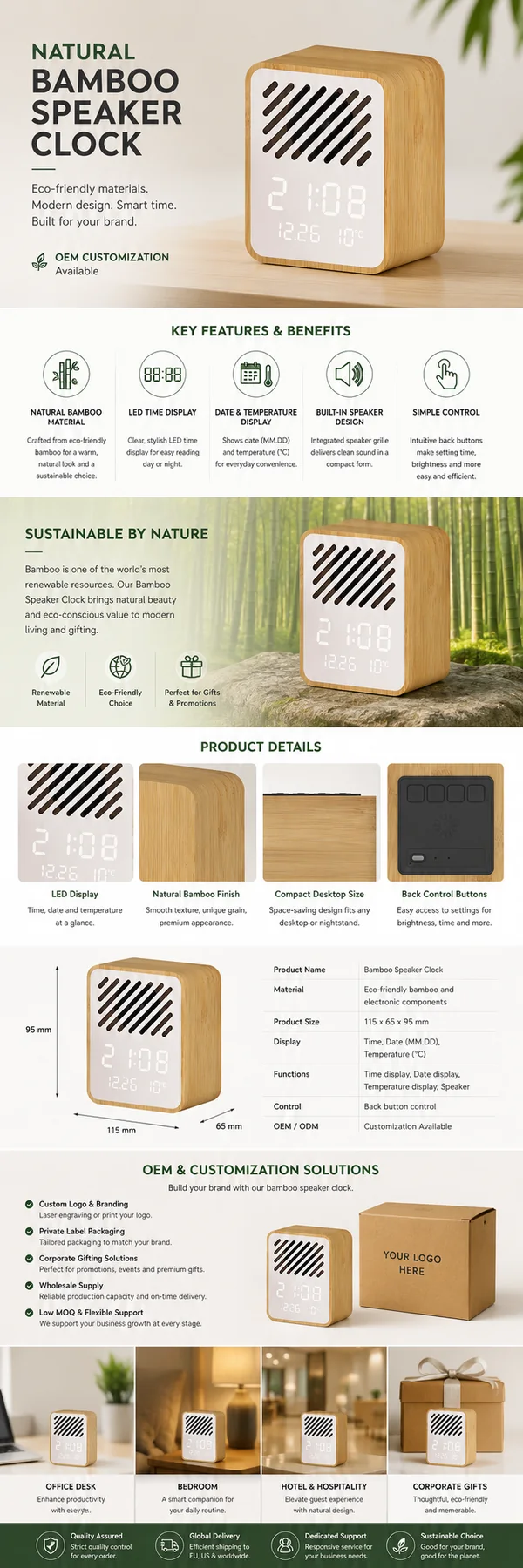
Before releasing a private label bamboo electronics order, review Bamboo speaker clock production inspection guide, Custom bamboo wireless charger sample and artwork approval, Bamboo electronics compliance checklist and confirm the requirements for your project.
Who This Guide Is For
This guide is for brand owners, importers, product managers and OEM project teams preparing a private label bamboo electronics order. It covers the document set that should connect the selected model, approved sample, logo, packaging, test evidence and production release.
A message saying “sample approved” is not a complete production instruction. A bamboo charging clock, speaker clock or desk organizer can look correct while the power input, electronics, control logic, accessories, manual or packed configuration remains unclear. The buyer needs one controlled record that every team can identify and use.
Quick Decision Guide
| Document | Main purpose | Approval owner |
|---|---|---|
| Product specification | Defines the exact model and configuration | Product or engineering lead |
| Approved sample record | Connects visible and functional approval to a dated unit | Buyer project owner |
| Artwork file | Controls logo size, position, process and color | Brand team |
| Packaging specification | Defines box, insert, manual, labels and carton | Packaging or operations lead |
| Test and compliance file | Records evidence for the exact destination market | Compliance lead |
| Production release | Lists open items, changes and final authorization | Authorized buyer owner |
Do not treat a supplier brochure, product photograph or old report as evidence for the current order unless the model, electronics and market scope match.
Start With One Controlled Product Specification
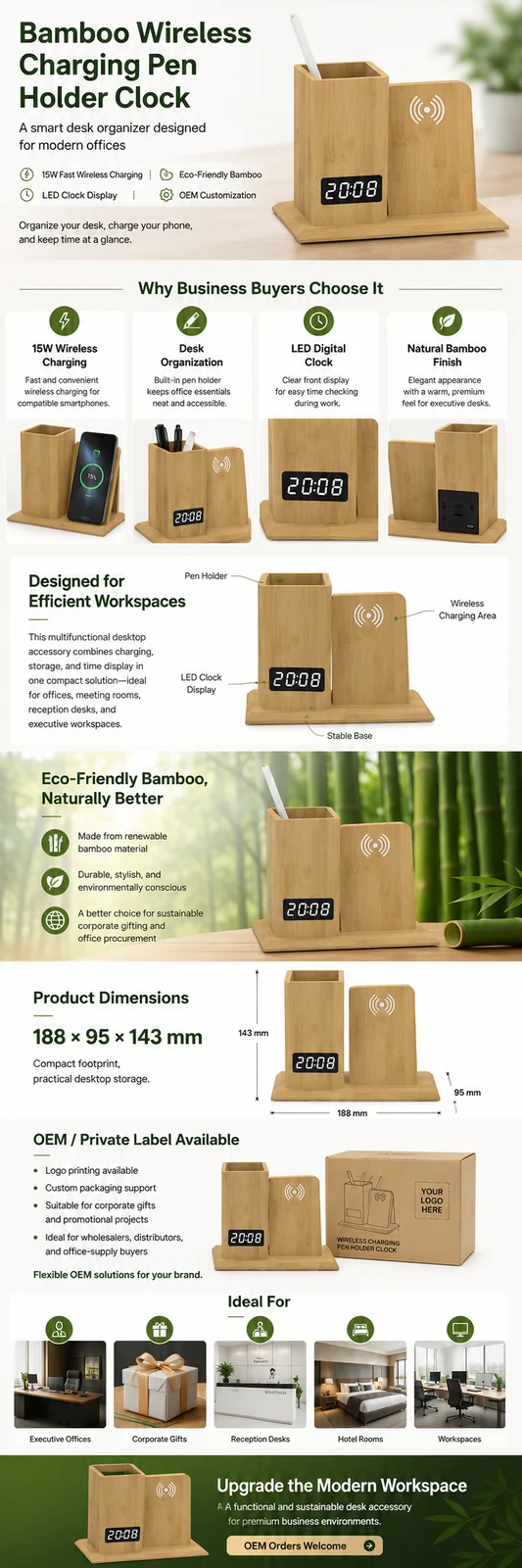
The product specification is the index for the entire order. Give it a revision number, date and owner. Identify the exact model code and describe the approved configuration without relying only on a marketing name.
At minimum, record:
- Product dimensions, construction and visible materials
- Bamboo finish range and unacceptable surface defects
- Display, controls and user functions included in the quoted version
- Power input, supplied cable or adapter and accessory list
- Wireless charging, Bluetooth, audio, alarm or lighting functions that apply
- Logo process, packaging route and destination market
- Test methods and documents that still require confirmation
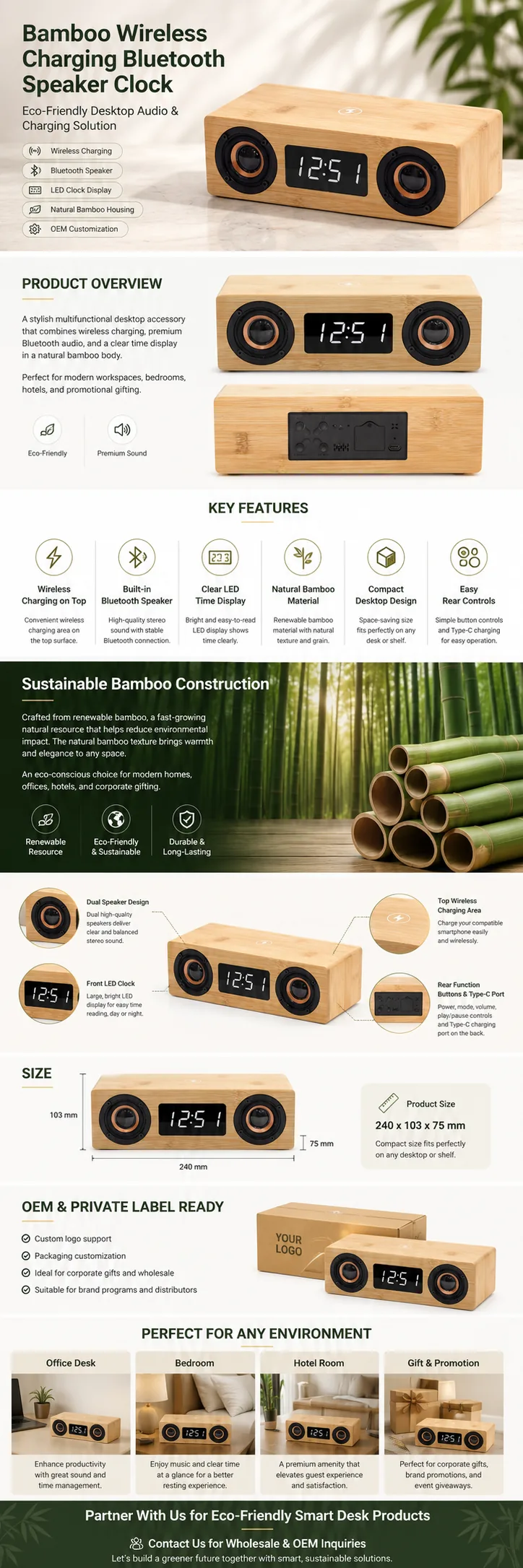
For multifunction products such as W120, W125, Y120 or a wireless charging clock, separate every function into its own line. This prevents one general approval from hiding an unresolved charging, clock, audio or lighting requirement.
Link the Approved Sample to Dated Evidence
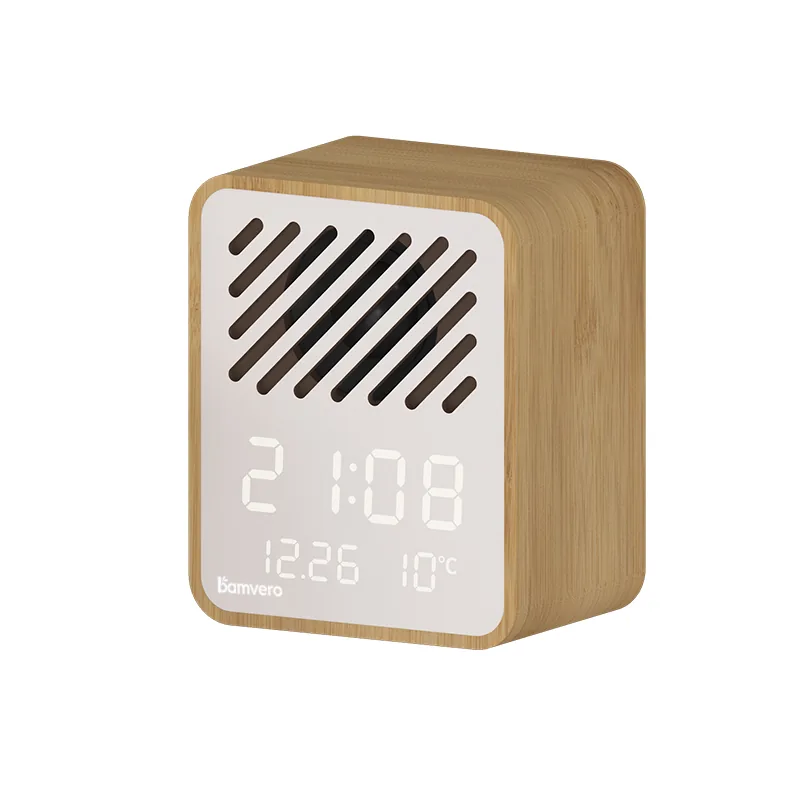
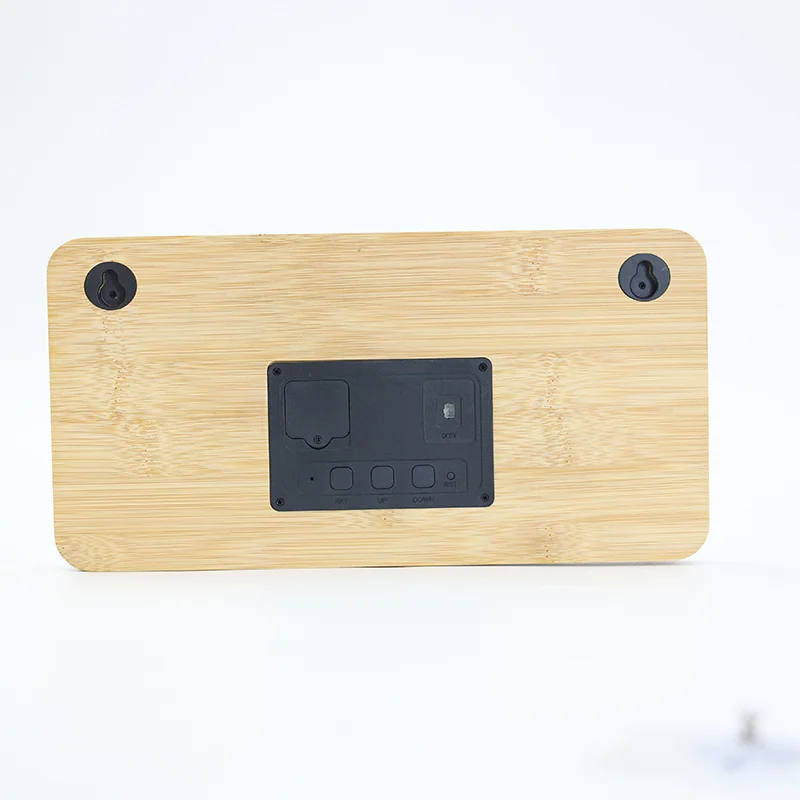
Create an approval record for the physical sample. Include the sample reference, date received, model configuration and decision. Photograph the front, rear, sides, controls, ports, display, charging area, logo and packed contents.
Record each review point as approved, approved with a stated condition, or not approved. If a correction is accepted through photographs, say which visual point the photograph closes. Functional corrections should be retested using an agreed method.
Keep the approved unit or a signed reference sample available for production comparison when practical. If the sample will be changed after approval, issue a new revision rather than editing the previous decision silently.
Control Logo and Packaging Artwork as Production Files
Logo and packaging files need production details, not only a presentation mockup. The logo record should identify the final vector artwork, process, size, position, orientation and visible color target. Natural bamboo grain can change the perceived contrast, so approve a representative result on the real surface.
The packaging file should cover:
- Box structure, material and print artwork revision
- Product orientation, insert and protection method
- Included cable, adapter, manual and accessories
- Barcode, model name, importer information and carton marks
- Manual language and destination-market warnings requiring review
- Master carton quantity, labeling and packed-sample approval
Approve the complete packed sample, because a correct product can still ship with the wrong manual, cable, label or model artwork.
Build a Test and Compliance Evidence Index
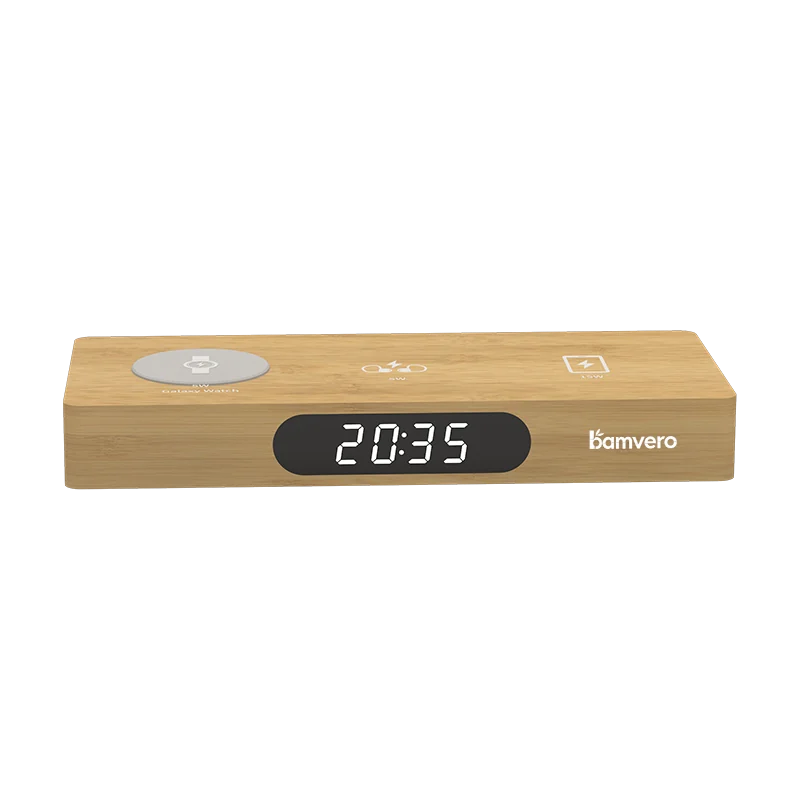
Create an evidence index instead of attaching unrelated reports to an email. For every item, record the document name, issuing party, date, model or component covered, destination market and status.
The required evidence depends on the exact product and country. A wireless charging model, Bluetooth product, mains-powered adapter or battery configuration may have different requirements. Ask a qualified compliance provider to confirm the applicable route; do not assume that one certificate covers an entire product family.
The index should also show missing evidence, who will supply it and when it must be reviewed. “To be confirmed” is safer than copying a claim from another model.
Record Changes Before Production Release
Create a change log from quotation through final sample. Record each proposed change to electronics, firmware, power accessories, bamboo or coating, logo, packaging, manual and included parts. State the reason, affected documents, test impact and approval owner.
A change that is invisible from the outside can still affect performance or market documentation. Component substitutions should therefore trigger a review of the controlled specification and relevant evidence before materials are released.
The production release should list the approved revision of every file and any unresolved item. Do not authorize production through a separate chat message that cannot be traced back to the document set.
Prepare an Inspection and Shipment Record
The pre-production documents should become the inspection basis. Define which functions will be tested, how appearance will be judged and which packaging details will be verified. Separate critical, major and minor issues according to buyer risk and the agreed inspection method.
The shipment record should identify the order, inspected lot, result, deviations, corrective actions and final decision owner. Any accepted concession should state whether it applies only to the current shipment. Keep production photos and inspection evidence linked to the same model and revision.
A Practical Pre-Production Document Pack
Use a folder structure that makes the current revision obvious:
- Commercial order and quotation scope
- Controlled product specification
- Approved sample record and photographs
- Logo and packaging artwork
- Manuals, labels and carton marks
- Test and compliance evidence index
- Change log and production release
- Inspection criteria and shipment record
Before release, ask a team member who did not build the folder to find the current model, logo, cable, manual and test requirement. If the answer depends on private chat history, the pack is not ready.
Final Buyer Checklist
- Is one model and electronics configuration clearly identified?
- Does the approved sample record match the production specification?
- Are logo, packaging, manual and labels under revision control?
- Does each report identify the exact model or component it covers?
- Are destination-market requirements assigned to a qualified reviewer?
- Are changes recorded with their document and test impact?
- Can inspection teams use the same approved evidence?
- Is the production release signed by the authorized owner?
Send Bamvero the target model, market, functions, branding, packaging and evidence needs when requesting a private label proposal. A structured brief makes quotation, sampling and document review more precise.
Related sourcing resources
Methodology and official references
Qualification, charging and destination-market requirements depend on the exact supplied model and configuration. Use qualified providers to confirm which evidence applies.
Frequently asked questions
What is the first document for a private label bamboo electronics order?
Use one controlled product specification that identifies the exact model, electronics, functions, power, finish, accessories, artwork, packaging and destination market.
Is a message saying sample approved enough to start production?
No. Link the decision to a dated sample reference, photographs, specification revision, conditions and authorized approval owner.
Can one test report cover every model in a bamboo electronics range?
Do not assume it can. Record the model or component, configuration, date and market scope covered, then ask a qualified provider to confirm applicability.
Which files need revision control?
Control the product specification, sample record, logo and packaging artwork, manual, labels, evidence index, change log, inspection criteria and production release.
How should component changes be approved?
Record the reason, affected documents, performance or compliance impact, required retesting and authorized buyer decision before production materials are released.
Build the specification before comparing the final price.
Align the target channel, product functions, destination market, branding and packaging route before approving a sample or bulk quotation.